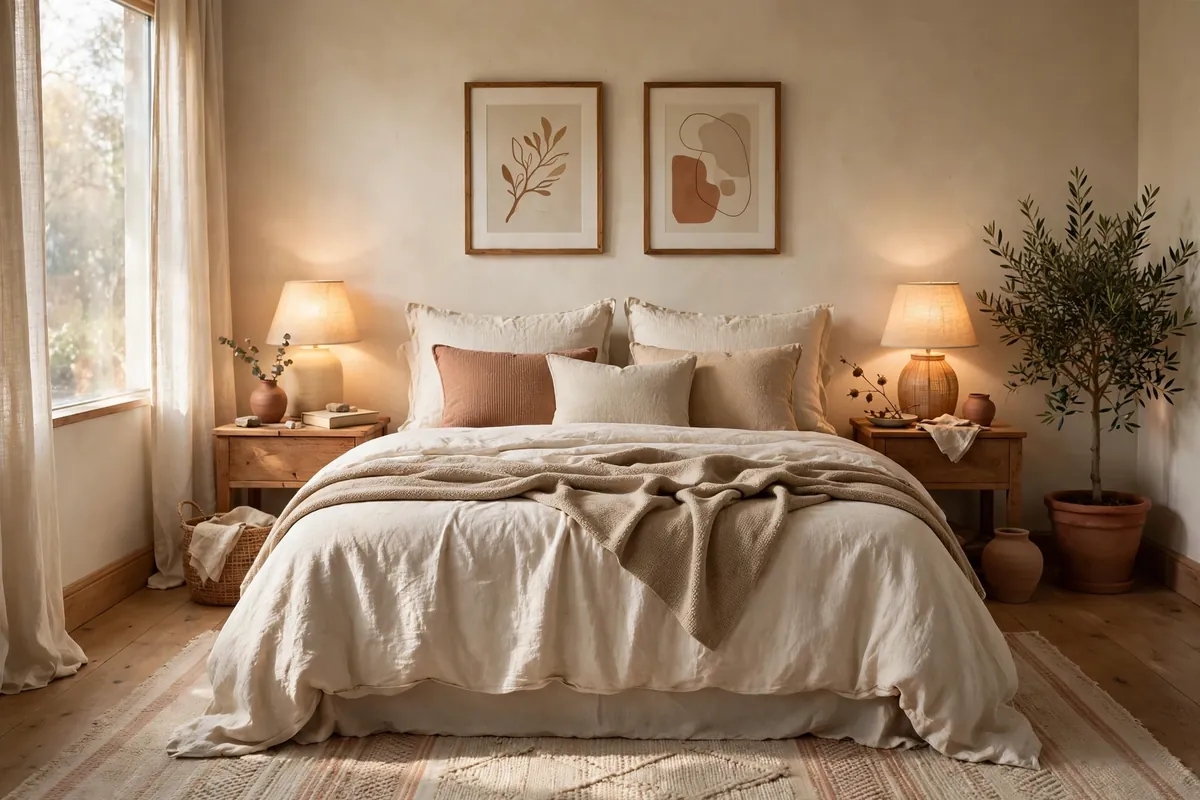
Your bedroom is one of those spaces where you start and end your day, so it should feel comfortable and relaxing. But making it look good doesn’t mean you have to spend a lot of money or completely redo the room. Sometimes, something as simple as a warm bedside lamp, a few soft pillows, a cozy rug, some wall art, or a little greenery can make the whole space feel different.
If your bedroom feels a little plain, cluttered, or just not quite you, don’t worry — you don’t need to change everything at once. In this guide we have put together 25 bedroom decor items and ideas that can help you give your room a fresh, cozy feel. Whether you have a small bedroom, live in an apartment or rental, or simply want to decorate without spending too much, these ideas are easy to try and can be adapted to your own style.
Where to start: if the room needs everything, work in this order and stop whenever it feels finished — most bedrooms come together by step four.
- Layout first. Arrange the furniture you already own before buying anything.
- Pick a palette. Two or three colors, repeated — this one decision makes every later choice easier.
- Dress the bed. It is the largest surface in the room, so it sets the tone for everything else.
- Layer the lighting. Warm light at more than one height is what makes a room feel cozy.
- Treat the walls and windows. Art, mirrors, and curtains add height and softness.
- Add storage that looks good. Clutter control is decor, not housekeeping.
- Finish with texture and personal pieces. Throws, plants, and collected items make it yours.
Quick List: Best Bedroom Decor Items
| # | Bedroom Decor Item | Best For |
|---|---|---|
| 1 | Layered bedding set | A full bedroom refresh |
| 2 | Throw pillows | Making the bed look styled |
| 3 | Cozy blanket or throw | Comfort and texture |
| 4 | Headboard and above-bed styling | Focal point styling |
| 5 | Bedside lamp | Cozy lighting and reading |
| 6 | Plug-in wall sconces | Layered, renter-friendly light |
| 7 | LED strip and string lights | Mood lighting |
| 8 | Candle holders | Cozy atmosphere |
| 9 | Wall art and gallery walls | Filling empty walls |
| 10 | Mirrors | Small rooms and brighter walls |
| 11 | Peel-and-stick accent wall | Renters and bold focal walls |
| 12 | Curtains | Privacy and softness |
| 13 | Photo display | Personal decoration |
| 14 | Bedside table | Function and styling |
| 15 | Floating shelves and book storage | Wall decor and storage |
| 16 | Storage baskets | Reducing clutter |
| 17 | Under-bed storage | Hidden space in small rooms |
| 18 | Decorative tray | Organizing small items |
| 19 | Area rug | Warmth, comfort and scale |
| 20 | Accent chair | Reading corner or empty space |
| 21 | Foot-of-bed bench or ottoman | A finished, layered bed wall |
| 22 | Plants and greenery | A fresh, natural look |
| 23 | Wall clock | Simple wall decor |
| 24 | Room diffuser | Fresh and relaxing feel |
| 25 | Collected and vintage finds | Personality on a budget |
Start With the Bed
The bed takes up more visual space than everything else in the room combined, so it is where a decor update pays off fastest. Get these four layers right and the rest of the room needs surprisingly little.
1. Layered Bedding Set
A bedding set can refresh the whole bedroom quickly. New sheets, pillowcases, and a comforter or duvet make the room feel cleaner and more put together — and layering is what turns plain bedding into a styled bed. Start with smooth sheets, add a duvet or comforter folded back at the top, then finish with a lighter blanket or quilt across the lower half so the bed has visible layers instead of one flat surface.
If you are not sure what color to choose, start with neutral bedding like white, cream, beige, or soft grey. Neutrals are easy to live with and let you add color through pillows, blankets, or wall art instead. Keep the bedding itself simple and let texture do the work: linen-look weaves, a waffle blanket, or a quilted coverlet all add interest without pattern clashes.
Best for: a full bedroom refresh and bed styling. Style tip: fold the duvet back and drape a throw across the foot — the layers are the look.
2. Throw Pillows
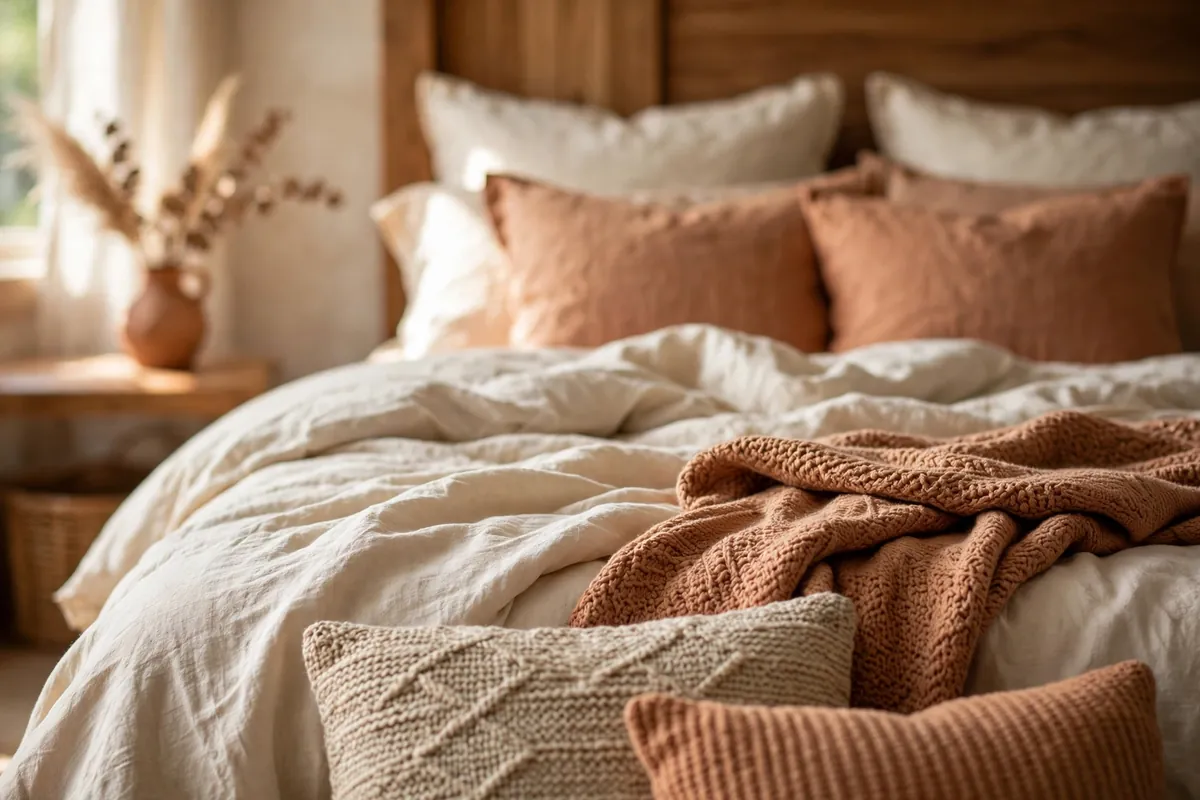
Throw pillows can make a plain bed look more stylish without a big budget. They add color, texture, and comfort to your bedroom. You can use neutral pillows for a clean look or add one accent color to make the bed stand out.
The key is not to overdo it. Too many pillows can make the bed look messy and become annoying when you sleep. For most bedrooms, two large pillows and one small decorative pillow are enough. Mix one solid color pillow with one textured or patterned pillow for an easy combination that always works.
Best for: bed styling and budget bedroom decor. Avoid if: you dislike removing pillows before sleeping.
3. Cozy Blanket or Throw
A cozy blanket adds comfort, texture, and warmth to your bedroom. You can place it at the end of your bed, over an accent chair, or inside a storage basket. It makes the room feel more relaxed and inviting, and it is one of the cheapest ways to introduce a new color or texture.
Choose a blanket that matches your room color. Neutral blankets are easy to style, while textured blankets — a chunky knit, a waffle weave, a soft fringe — can add depth to a simple bed setup. Fold the blanket across the end of the bed instead of spreading it flat; the folded edge looks deliberate and keeps it within easy reach.
Best for: cozy rooms, bed styling, and seasonal refreshes. Avoid if: your room already feels visually heavy.
4. Headboard and Above-Bed Styling
The wall above the bed is usually the main focal point in a bedroom, and it is the spot most likely to be left empty. A headboard anchors the bed and gives the whole wall a finished structure: upholstered panels feel soft and hotel-like, wood adds warmth, and for renters, peel-and-stick panels or a large piece of fabric hung behind the pillows can create the same effect without fixing anything to the wall.
Above the headboard, one main decor piece usually looks better than several small ones — a single framed print, a hanging textile, or a simple shelf. Whatever you hang there, install it securely: nothing heavy should sit above pillows unless it is properly fixed, and in rental spaces lightweight pieces are the safer choice.
Best for: bed wall styling and focal point design. Avoid if: you cannot install items safely — choose lightweight art instead.
Light & Warmth
Cozy is mostly a lighting decision. A single ceiling light flattens everything; warm light at bedside height, wall height, and one soft accent source is what makes a bedroom feel calm.
5. Bedside Lamp
A bedside lamp is one of the easiest bedroom decor items to improve both style and comfort. It adds soft lighting for reading, relaxing, or winding down at night. A warm lamp can make your bedroom feel more peaceful compared to harsh ceiling lights.
For small bedrooms, choose a compact lamp that does not take too much space on the nightstand. If your room has a modern style, go for a simple metal or ceramic lamp. If you prefer a cozy or farmhouse look, a lamp with a fabric shade can work better. Use warm white bulbs instead of bright white bulbs for a softer bedroom feel.
Best for: nightstands, reading corners, cozy bedrooms. Avoid if: your bedside space is extremely limited — try a sconce instead (next idea).
6. Plug-In Wall Sconces
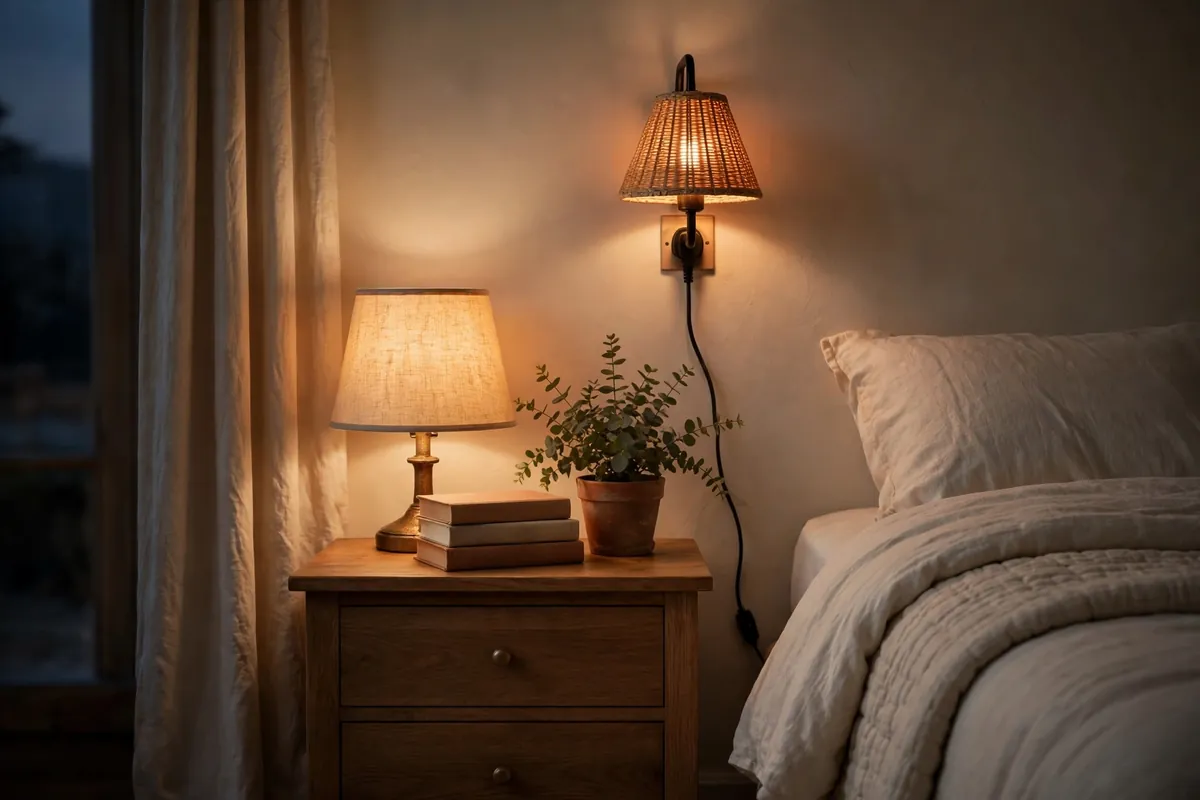
Plug-in wall sconces give you the layered look of hardwired lighting with none of the installation. They mount with a couple of screws — or, in many rentals, can be hung from picture hooks — and simply plug into the nearest outlet, often with the cord run neatly down the wall or hidden behind the nightstand. Mounted either side of the bed, they free up the entire nightstand surface, which matters most in small rooms where that surface is precious.
Sconces are the second layer in a well-lit bedroom: ceiling light for general brightness, lamps or sconces at pillow height for reading and winding down. Choose warm white bulbs (around 2700K) and shades that direct light down or diffuse it softly rather than glaring at eye level. Swing-arm styles are especially practical for readers.
Best for: small bedrooms, renters, and anyone whose nightstand is too small for a lamp. Avoid if: there is no outlet within cord reach of the bed.
7. LED Strip and String Lights
LED strip lights can create a modern and cozy bedroom atmosphere. They are popular for headboards, shelves, desks, and gaming-style bedrooms, and they work well for teen bedrooms, dorm rooms, or small apartments. String lights are the softer cousin of the same idea — draped along a headboard or shelf edge, they read as decor in daylight too.
Use soft colors or warm tones if you want a calm look, and hide the strip behind furniture so you see the glow rather than the source. Very bright or flashing lights can make the room feel less relaxing, so treat them as an accent layer, not the main light.
Best for: modern bedrooms, teen rooms, mood lighting. Avoid if: you want a classic or minimal bedroom style.
8. Candle Holders
A candle holder can add a calm and cozy feeling to your bedroom. It works well on dressers, shelves, nightstands, or trays, and even flameless candles can create the same relaxing look once the light drops.
Always be careful with real candles in bedrooms. Keep them away from curtains, bedding, paper, and other flammable items, and never leave one burning while you sleep. Flameless candles on a timer give you the glow with none of the risk, and they are the better default for a room designed around rest.
Best for: cozy atmosphere, dresser styling, shelf decor. Avoid if: you cannot use candles safely — flameless versions solve this.
Walls, Windows & Reflection
Bare walls and a bare window are what make a furnished room still feel unfinished. These five ideas add height, light, and personality — several of them without putting a single hole in the wall.
9. Wall Art and Gallery Walls
Wall art helps fill empty bedroom walls and gives the room personality. You can use framed prints, canvas art, nature photography, or simple abstract designs depending on your room style. A gallery wall — three to five pieces grouped as one composition — suits a wall beside the bed or above a dresser, where there is room to enjoy it up close.
For a small bedroom, avoid too many busy designs. One large piece above the bed or dresser can look better than many small random frames. Hang art so its center sits at about eye level (roughly 57 inches from the floor), or 6 to 8 inches above the furniture below it. If you are decorating on a budget, printable wall art in affordable frames is a simple option — and leaning a large framed piece on a dresser instead of hanging it keeps things renter-friendly.
Best for: empty walls, rental bedrooms, simple makeovers. Avoid if: your walls already look crowded.
10. Mirrors
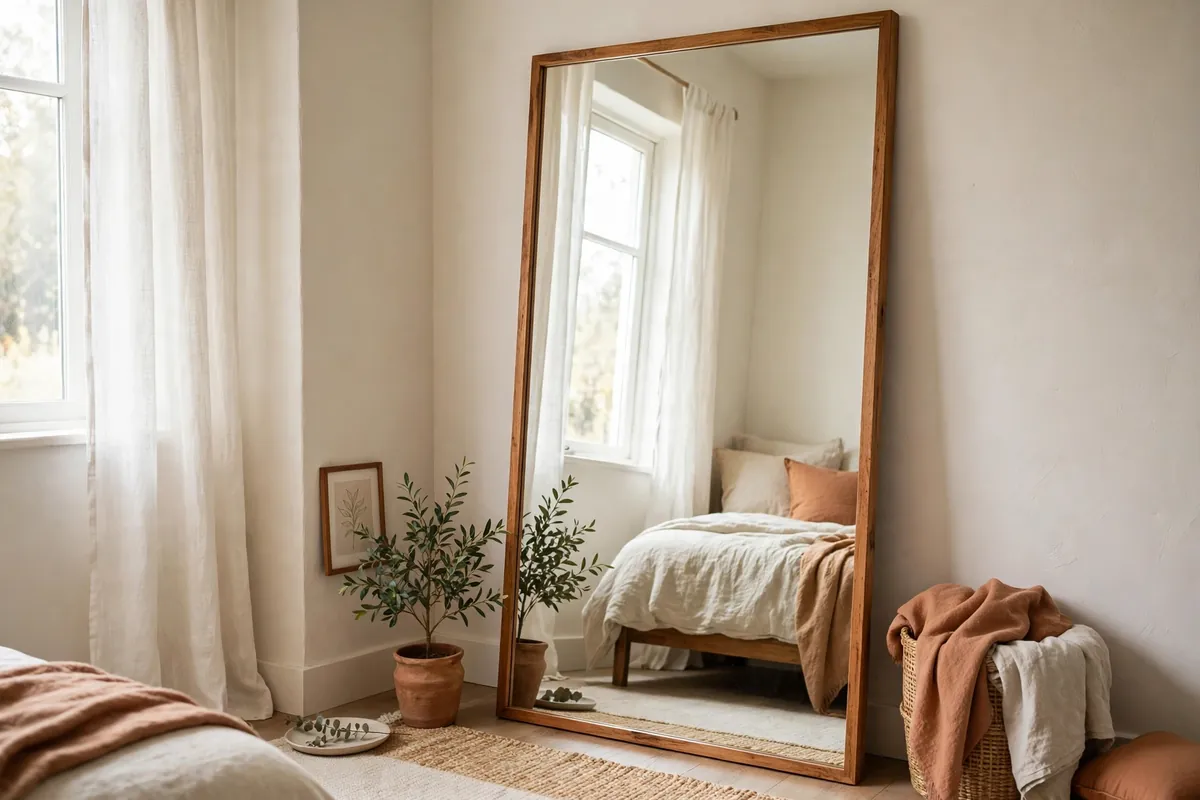
A mirror earns its place twice: it is useful and it changes how big and bright the room feels. A full-length mirror helps with outfit checks and, placed near or opposite a window, reflects daylight so a small bedroom feels more open and less cramped. A slim frame in black, warm wood, or white keeps it easy to match to different bedroom styles, and a leaning full-length mirror needs no installation at all.
Smaller decorative mirrors work as wall decor above a dresser or vanity, where round and arched shapes soften a room full of straight lines. Whichever size you choose, place it to reflect something worth looking at — light, the dressed bed, a plant — not clutter or a bare wall.
Best for: small bedrooms, apartments, dressing corners, brightening dark walls. Avoid if: there is no safe wall or floor space for one.
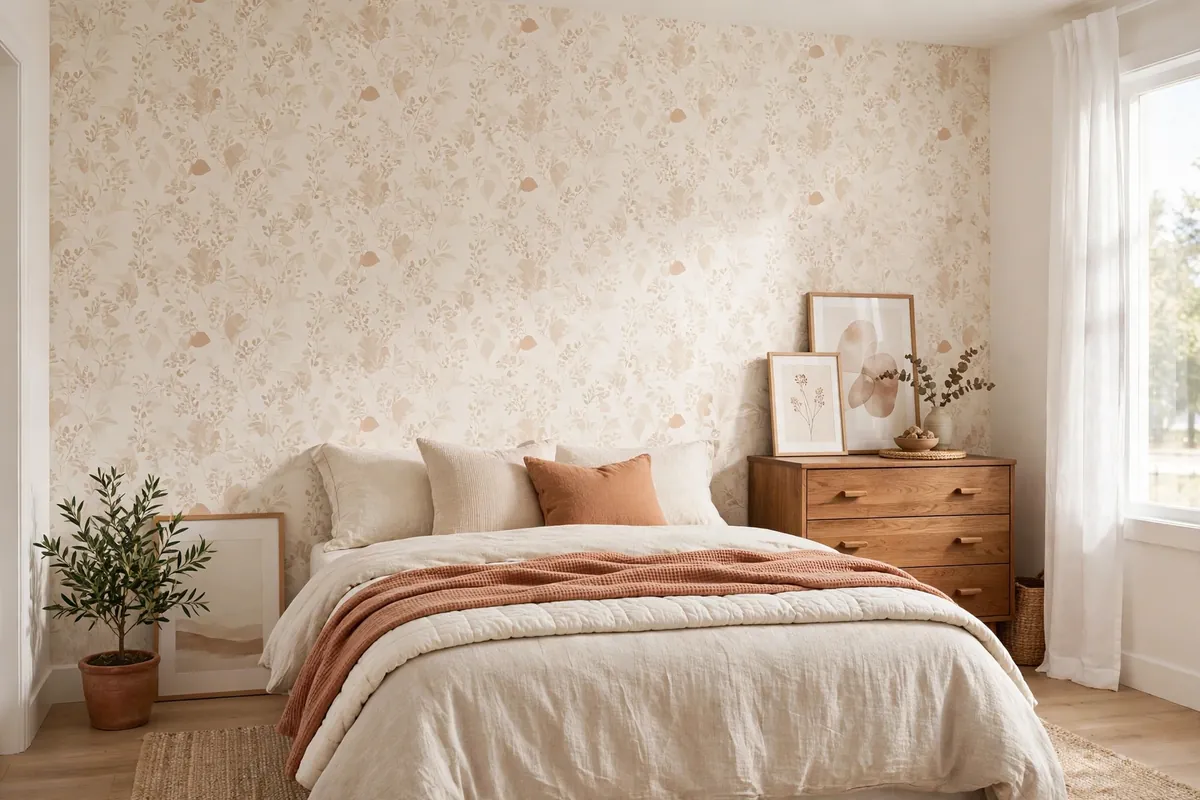
11. Peel-and-Stick Accent Wall
One patterned or colored wall behind the bed gives a plain bedroom a designed focal point, and peel-and-stick wallpaper makes it possible almost anywhere. It goes up like a giant sticker, needs no paste, and — on sound, well-prepared paint — peels away cleanly when you move or change your mind, which is why it has become the renter’s answer to the accent wall.
Keep the commitment low-risk: order a sample first and live with it on the wall for a few days, because patterns look different at full scale and in evening light. Subtle geometrics, soft botanical prints, and textured-look designs (grasscloth, limewash, fine stripes) age better than loud novelty prints. If a full wall feels like too much, the same material behind open shelves or inside a plain wardrobe creates a smaller version of the effect.
Best for: renters, plain new-build bedrooms, and anyone who wants one bold change. Avoid if: your walls are heavily textured or freshly painted — adhesion and clean removal both suffer.
12. Curtains
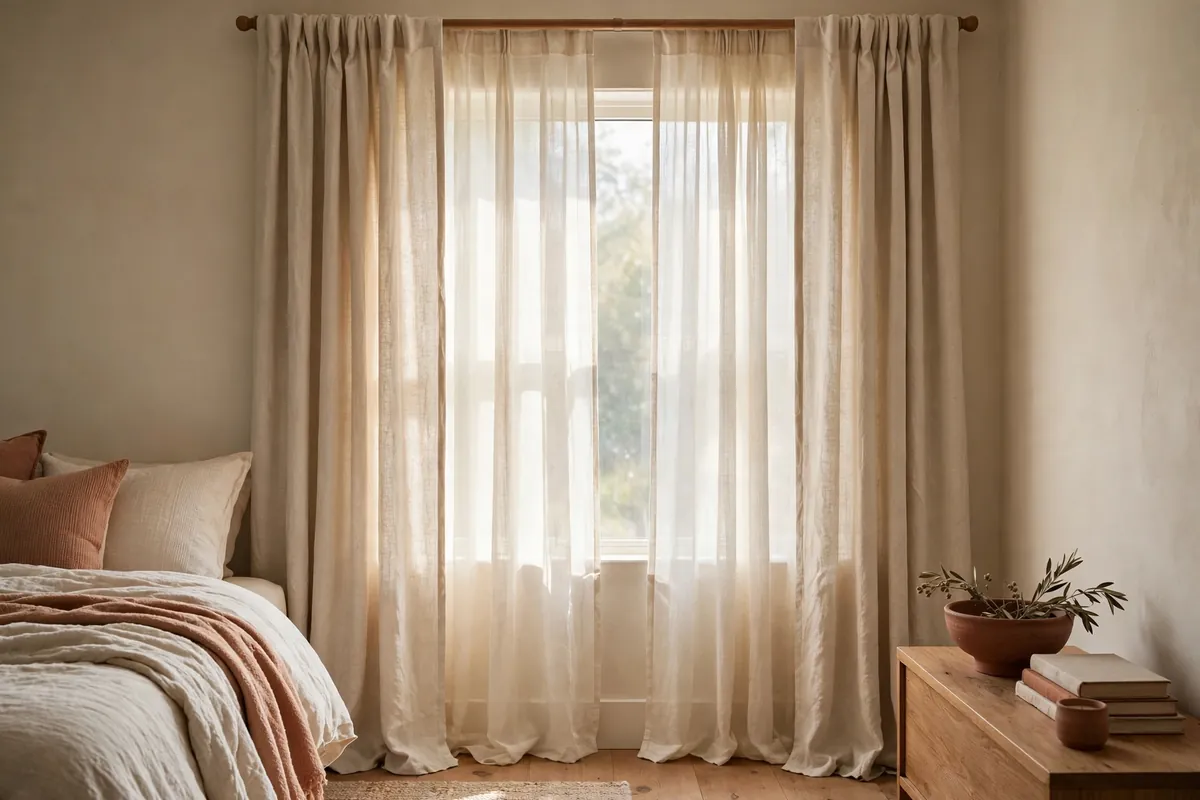
Curtains can completely change the feel of a bedroom. They add softness, privacy, and style, and they control sleep as much as looks — a blackout lining behind a decorative panel is one of the most practical upgrades in this whole list. Light curtains make a room feel bright and airy, while heavier curtains can make it feel warmer and more private.
How you hang them matters as much as the fabric. Mount the rod 4 to 6 inches above the window frame — or close to the ceiling — and extend it 6 to 12 inches beyond each side, so the curtains frame the window instead of covering it and the room feels taller. Choose panels that just touch the floor or hover slightly above it for a clean look, and layer sheers underneath if you want daytime privacy without losing the light.
Best for: privacy, soft decor, window styling, better sleep. Avoid if: the fabric makes the room too dark — layer sheers instead of going heavier.
13. Photo Display
A photo display adds a personal touch to your bedroom. You can use a hanging photo organizer, framed photos, a photo grid, or a small gallery wall, and it works well for cozy bedrooms, teen rooms, dorm rooms, and apartment bedrooms.
To keep it stylish, avoid adding too many random photos in different colors and frame styles. A consistent theme — matching frames, similar photo tones — makes the display look cleaner and more deliberate. One edited display on a single wall almost always beats small clusters scattered around the room.
Best for: personal decor, memory walls, casual bedroom style. Avoid if: you prefer a very minimal room.
Surfaces, Storage & Order
Decor never survives clutter. This group is about the surfaces you use every day and the storage that keeps them clear — chosen to look like part of the room, not like storage at all.
14. Bedside Table
A bedside table is both practical and decorative. It gives you a place for a lamp, book, phone, water glass, or small decor pieces, and a good bedside table can make your bedroom feel more finished. Aim for a top surface roughly level with the top of your mattress, so everything is easy to reach from bed.
For small bedrooms, choose a slim table or a floating nightstand that keeps the floor visible. If you need extra storage, choose one with a drawer or shelf, and keep only three to four items on top to avoid clutter — the drawer is where the rest belongs.
Best for: function, styling, storage. Avoid if: your bed area is very tight — a floating shelf can do the same job.
15. Floating Shelves and Book Storage
Floating shelves add decor without using floor space, which is why they work so well in small bedrooms. Style them with books, small plants, candles, photo frames, or decorative items — three to five pieces per shelf with some empty space left over. Too many items make shelves look messy rather than styled.
If you have the floor space and the books to fill it, a low bookshelf does the same job at ground level and can fill an empty wall with personality. The clean look comes from mixing: books in short stacks and upright runs, decor between them, and storage boxes or baskets on the lower shelves to hide clutter. Whichever you choose, treat shelves as display first and storage second, and they will stay looking deliberate.
Best for: small rooms, wall decor, extra storage, reading corners. Avoid if: you cannot install shelves safely, or your room already has too much furniture.
16. Storage Baskets
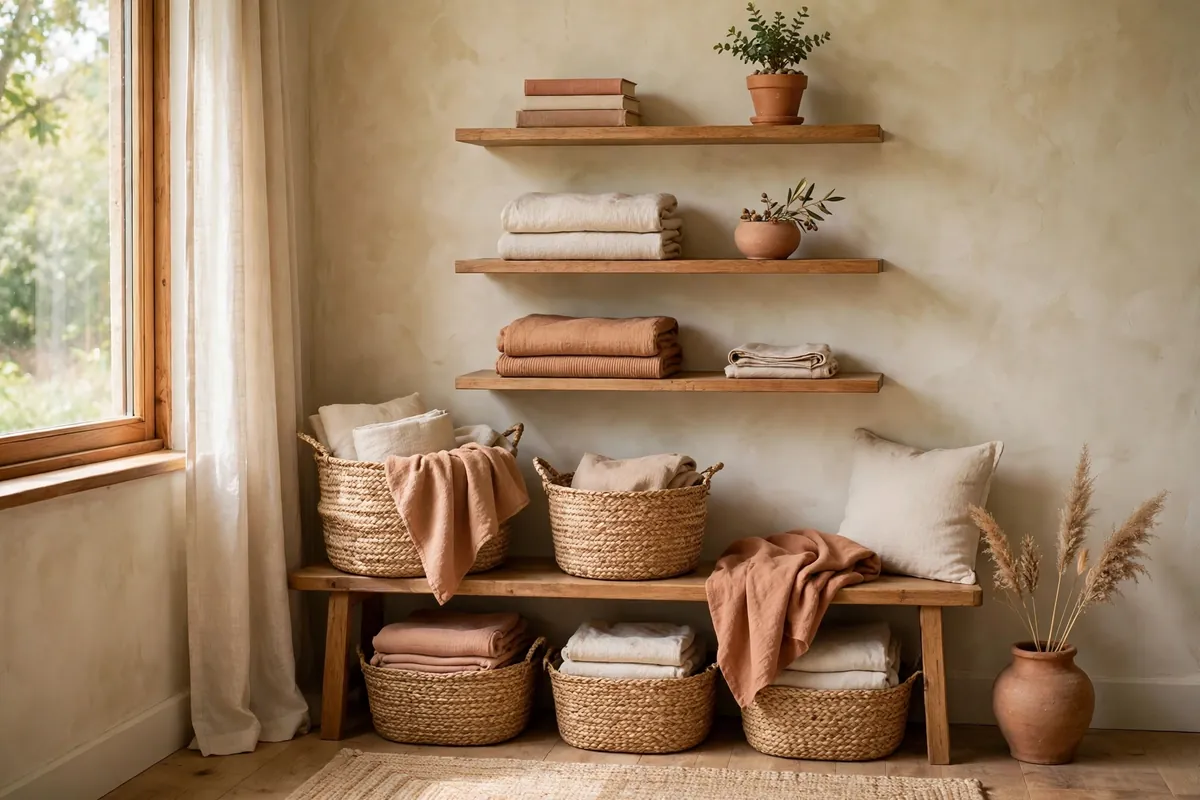
Storage baskets are useful because they work as both decor and organization. You can use them for blankets, extra pillows, clothes, books, or small clutter, and woven baskets look especially good in cozy, natural, and farmhouse-style bedrooms.
They are also helpful for small rooms because they keep visible clutter under control. A basket near the bed, under a table, or beside a dresser can make the room look cleaner in minutes. Choose natural textures like wicker, seagrass, cotton rope, or fabric, and keep sizes consistent within a group so they read as a set rather than a collection of leftovers.
Best for: clutter control, small rooms, blanket storage. Avoid if: you already have enough closed storage.
17. Under-Bed Storage
The space under your bed is the largest storage area most bedrooms never use. Low bins, rolling drawers, or vacuum bags turn it into hidden storage for out-of-season clothes, spare bedding, and shoes — out of sight, off the floor, and out of the room’s limited closet space. In a small bedroom, this one change can be what makes open, visible storage unnecessary.
Measure the clearance under your frame before buying anything, and choose containers with lids if your floors collect dust. Keep the things you reach for monthly near the edges and the deep-storage items in the middle, and label the ends — under-bed storage only works if you can find things without emptying it all out.
Best for: small bedrooms, apartments, seasonal clothes and spare bedding. Avoid if: your bed frame sits too low for containers — risers can add clearance if the style allows.
18. Decorative Tray
A decorative tray is a small item that can make your dresser, nightstand, or vanity look more organized. Use it for perfume bottles, jewelry, candles, skincare products, or the small items that otherwise spread across every surface.
This is one of the easiest ways to make clutter look intentional. Instead of placing small items randomly, group them neatly on a tray and the same objects suddenly read as a styled arrangement. A round tray softens the look; a rectangular tray suits a more modern room.
Best for: dressers, vanities, nightstands. Avoid if: your surfaces are already too full — clear them first, then add the tray.
Floor, Seating & Finishing Touches
The last group works at floor level and in the corners — the pieces that make a room feel complete when you stand in the doorway, plus the finishing touches that make it personal.
19. Area Rug
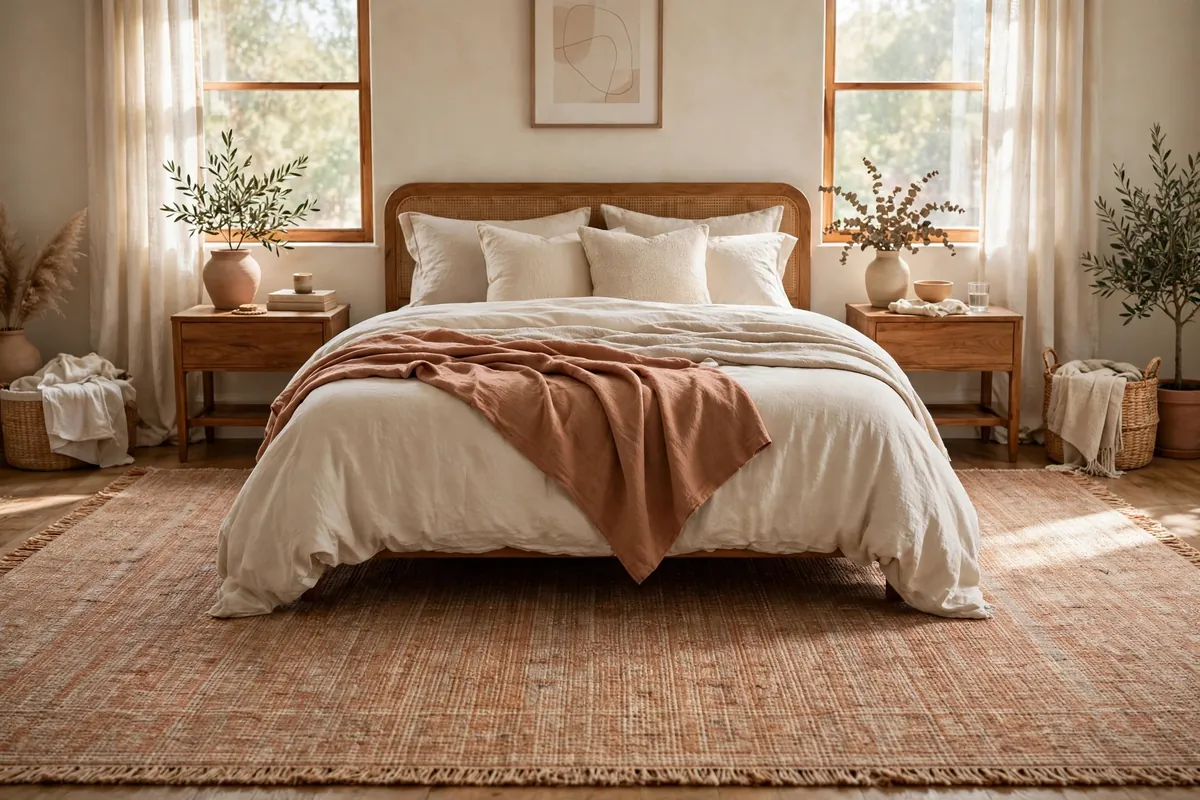
An area rug can make a bedroom feel warmer, softer, and more complete. It works especially well if your room has wooden, tile, or plain flooring, and a rug beside or under the bed adds comfort when you step out of bed in the morning.
Placement is what separates a rug that decorates from one that just lies there. The reliable rule: the rug goes under the lower two-thirds of the bed and extends out on both sides and at the foot, so you land on it when you get up and the nightstands stay on the floor. For a queen bed that usually means an 8×10 ft rug; a 5×8 ft rug can work in a smaller room placed the same way, just further under the bed. For small rooms, avoid rugs that are too dark; a light-colored, textured, or soft neutral rug makes the room feel more open and cozy at the same time.
Best for: cozy bedrooms, cold floors, large empty spaces. Avoid if: the rug is so small it floats in the middle of the room — size up or skip it.
20. Accent Chair
An accent chair gives a bedroom a second place to be — somewhere other than the bed to read, put on shoes, or enjoy some quiet time — and it can turn an unused corner into the most inviting spot in the room. A small upholstered chair, a slipper chair without arms, or a simple wooden chair with a cushion all work; scale matters more than style, so measure the corner before falling for a chair that overwhelms it.
Style it lightly: a small throw blanket over the back and a plant or floor lamp beside it is usually enough. Keep the path around it clear, and resist letting it become a clothes pile — a chair that stays empty stays decorative, so give laundry a basket (idea 16) instead.
Best for: reading corners, larger bedrooms, cozy styling. Avoid if: it blocks movement in the room.
21. Foot-of-Bed Bench or Ottoman
A bench or ottoman at the foot of the bed is the piece that makes a bed wall look finished. It gives the eye a stopping point, catches the folded throw and tomorrow’s clothes before they reach the floor, and provides a genuinely useful seat for putting on shoes. Storage versions hide spare blankets inside, which makes them a quiet two-for-one in smaller rooms.
Choose a bench a few inches narrower than the bed and no taller than the mattress, so it layers without looming. Upholstered styles soften the room; wood or woven styles add texture. In a small bedroom, a pair of small ottomans or cubes gives the same effect and can be separated when floor space is needed.
Best for: making the bed wall feel complete, extra seating, hidden storage. Avoid if: the walkway at the foot of the bed is already tight.
22. Plants and Greenery
Plants soften a bedroom like nothing else on this list — they add color, height, and a sense of life to shelves, nightstands, dressers, and empty corners. A plant stand or a simple stool lifts a pot off the floor and turns one plant into a composed corner, and grouping two or three plants at different heights looks more natural than a single specimen.
Real or faux is a practical choice, not a style one. If your room gets decent light and you will water them, real plants reward you; snake plants and pothos forgive beginners. If the room is dark or your schedule is unreliable, good faux plants give the same look with no maintenance — choose realistic ones with matte, varied leaves, and set them in ceramic, clay, or woven planters, which make even simple faux plants look better. One plant matched to your light beats five struggling ones.
Best for: corners, shelves, nightstands, a fresh natural look. Avoid if: the plant looks too artificial, or it blocks walking space.
23. Wall Clock
A wall clock is a simple decor item that can fill empty wall space. It is useful and can match many bedroom styles, from modern to farmhouse, and it gives a wall that is not the bed wall something considered to look at.
Choose a clock that fits your room size. A very large clock can overwhelm a small room, while a tiny clock may look lost on a big wall. In a room built for rest, choose a silent, non-ticking movement — the prettiest clock in the world is not worth a sound you can hear at 3 a.m.
Best for: empty walls, simple decor, practical styling. Avoid if: you are sensitive to ticking — choose a silent model.
24. Room Diffuser
A diffuser adds the one layer of decor you cannot see: scent. A reed diffuser on a dresser or a small ultrasonic diffuser on a nightstand makes the room feel calm the moment you walk in, and the vessel itself doubles as a decorative object. Calm, familiar scents like lavender, cedar, vanilla, or eucalyptus suit bedrooms best; strong or sweet fragrances can feel overwhelming in a small room, so start lighter than you think you need.
Style it like any other small object: place it on a tray or shelf so it looks deliberate, keep ultrasonic models away from direct contact with wood finishes, and clean them between scents so the fragrance stays true. If you are sensitive to fragrance, skip this one entirely — scent is the most personal layer in the room. And because bedroom air comfort works as a system, if you also run a humidifier, our guide to bedroom humidifier placement explains where to put it for better results without making nearby furniture or bedding damp.
Best for: relaxing bedrooms, cozy atmosphere. Avoid if: you are sensitive to fragrance.
25. Collected and Vintage Finds
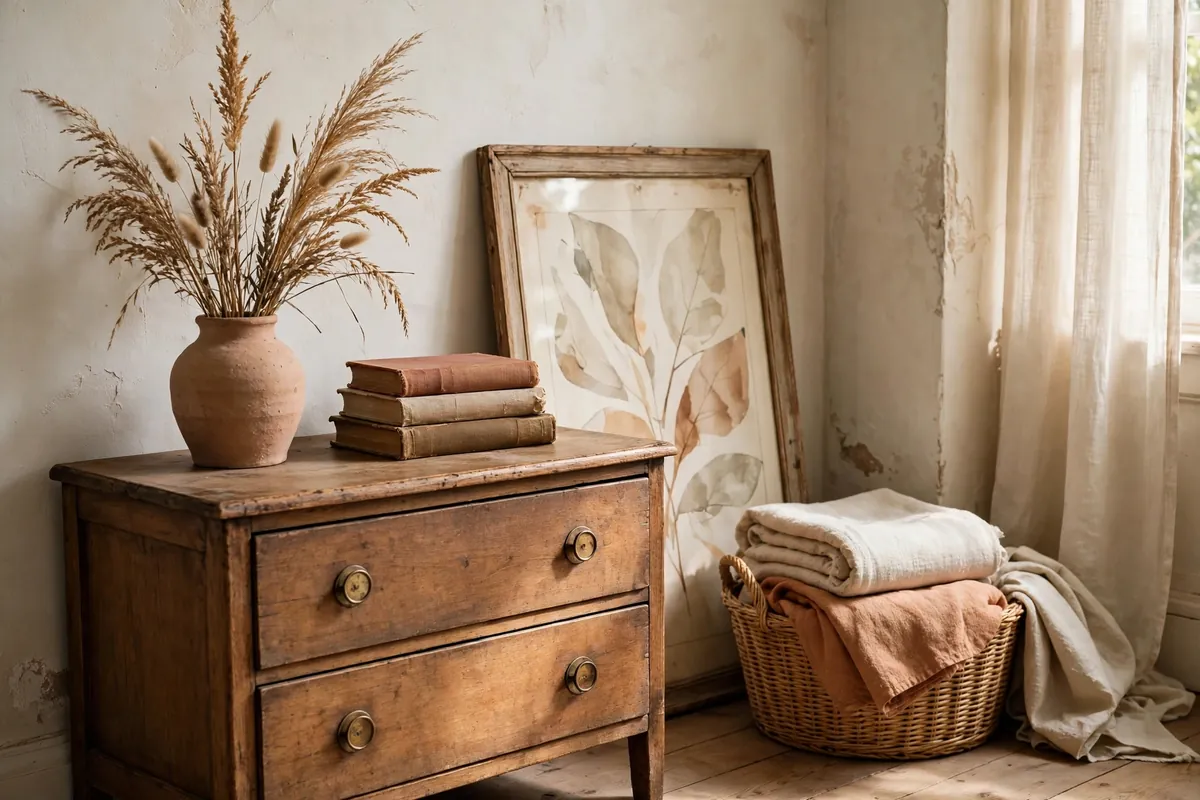
The most personal bedrooms are rarely the ones bought all at once. Collected and vintage finds — a thrifted wooden dresser, a secondhand mirror, an old framed print, a ceramic vase from a flea market — give a room the one thing new decor cannot: a sense that it was assembled by a person, over time. They are also the budget decorator’s best source, since solid old pieces often cost less than flimsy new ones.
Shop with your palette in hand and edit ruthlessly. A vintage piece works when its color, wood tone, or shape connects to something already in the room; it becomes clutter when it connects to nothing. Start with one or two finds — a dresser, a chair, a piece of art — clean them well, and let them anchor the room while newer basics (bedding, curtains, lighting) stay simple around them.
Best for: personality, budget decorating, warm eclectic style. Avoid if: you are buying without a palette — that is how collected becomes cluttered.
How to Choose the Best Bedroom Decor Items
Before buying bedroom decor items, think about your room size, color theme, storage needs, and daily routine. A small bedroom needs practical decor that saves space, while a larger bedroom can handle bigger items like rugs, accent chairs, mirrors, or bookshelves.
1. Choose a Color Theme First
A color theme makes your bedroom look more planned. You do not need to use only one color, but your colors should work well together. Neutral colors like white, beige, grey, cream, and soft brown are easy to decorate with. You can add one accent color through pillows, art, blankets, or curtains.
2. Measure Your Room Before Buying Decor
Before buying rugs, shelves, mirrors, tables, or chairs, measure your room. Many decor items look smaller online than they actually are. Measuring first helps you avoid buying items that make the bedroom feel crowded. The measurements below are good starting points for the most common pieces:
| Item | A Good Starting Point | Why It Works |
|---|---|---|
| Area rug | 8×10 ft for a queen bed (5×8 ft in a small room), placed under the lower two-thirds of the bed | You land on the rug when you get up, and the room looks anchored rather than scattered |
| Curtains | Rod 4–6 in above the frame or near the ceiling, extending 6–12 in past each side; panels to the floor | The window looks bigger and the ceiling taller |
| Wall art | Center about 57 in from the floor, or 6–8 in above the furniture below it | Art relates to the furniture instead of floating on the wall |
| Bedside table | Top roughly level with the top of the mattress (often 24–28 in) | Lamps, books, and water are easy to reach from bed |
| Walkways | Around 24–36 in of clear space beside and at the foot of the bed where the room allows | The room feels calm to move through, not squeezed |
3. Mix Style With Function
Multifunctional pieces make your bedroom more useful without taking up too much space. Storage benches hold blankets, baskets hide clutter, and in a room that doubles as a guest space, a sleeper sofa can add both seating and an extra bed — if you are considering one, our sleeper sofa buying guide walks through the options. The principle matters more than any single piece: every item should earn its place twice.
4. Avoid Overcrowding the Room
Too many decor items can make your bedroom feel messy. It is better to choose fewer pieces that work well together. Start with lighting, bedding, wall decor, storage, and one or two personal touches.
5. Pick Decor That Matches Your Lifestyle
If you do not like cleaning often, avoid too many small items that collect dust. If you have a small room, choose wall-mounted or multi-use decor. If you want a relaxing room, focus on soft lighting, cozy bedding, and simple colors.
Bedroom Decor Ideas for Small Rooms
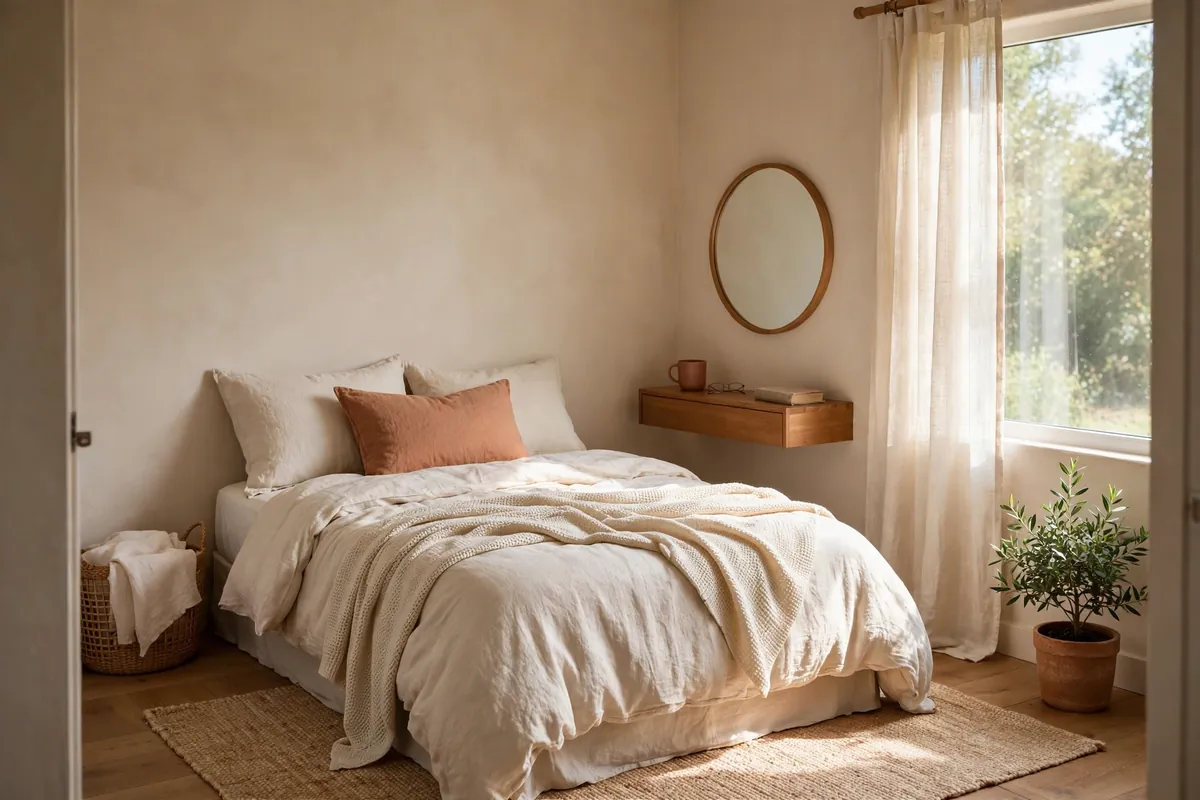
Small bedrooms do not need more decor — they need the right decor, in the right order. Start with layout: push the bed against the longest wall, keep the path from door to bed clear, and let every other piece justify the floor space it takes. A small room that is easy to move through already feels bigger than a larger room you have to squeeze around.
Then work with light and reflection. Keep the palette light but not bare — pale bedding with texture (linen, waffle, quilted cotton) reads cozy rather than stark. Hang a mirror where it catches a window, choose curtains that mount high and clear the glass, and swap a table lamp for a wall sconce if the nightstand is tiny. A floating nightstand keeps the floor visible, and visible floor is what convinces the eye a room is spacious.
Storage is the third lever. Use the under-bed space for the things that currently live in piles, keep one basket for the daily overflow, and take storage vertical with shelves instead of a second dresser. And do not rule out deeper colors: a small room in a deliberate deep tone, with warm layered lighting and light bedding, can feel like a cocoon rather than a cave — the mistake is not dark walls, it is dark walls with weak light and heavy furniture.
Budget Bedroom Decor Tips
You do not need a large budget to make your bedroom look better — but order matters. The cheapest makeovers follow a sequence: free changes first, cheap textiles second, and only then a purchase or two to fill real gaps.
- Declutter and rearrange (free). Move the furniture, clear the surfaces, and remove everything that does not belong. The cheapest bedroom makeover often starts with taking things out: once the room is clean and organized, even small decor items look better.
- Swap textiles, not furniture (low cost). Change pillow covers instead of buying new pillows, add a folded throw at the end of the bed, and wash or rotate the bedding you own. Textiles are the largest visible surfaces after the bed itself.
- Use the printable and plant tricks (low cost). Printable wall art in affordable frames and one or two real or faux plants give walls and corners a finished feel for very little.
- Shop secondhand before new (low cost). A thrifted mirror, dresser, or chair (idea 25) often costs less than a new equivalent and adds more character.
- Fix the lighting (low to moderate). Warm bulbs in the lamps you have, or one plug-in sconce, changes the evening feel of the whole room.
- Buy one gap-filler last. If the room still lacks one thing — a rug that ties it together, a mirror, real blackout curtains — buy that one piece properly instead of five small things.
Common Bedroom Decor Mistakes to Avoid
Buying Decor Without a Plan
Random decor items can make the bedroom look messy. Before buying anything, decide your main style, color theme, and what the room actually needs.
Using Too Many Colors
Too many strong colors can make the room feel busy. Choose two or three main colors and repeat them through bedding, curtains, pillows, and wall art.
Ignoring Lighting
Lighting affects the whole mood of the bedroom. A room with only harsh ceiling light can feel uncomfortable. Add soft lamps, warm bulbs, or mood lighting for a calmer look.
Adding Too Much Furniture
A bedroom should feel comfortable to move around in. If you add too many tables, chairs, shelves, or baskets, the room can feel smaller.
Forgetting Storage
Decor looks better when clutter is controlled. Use baskets, trays, shelves, and drawers to keep everyday items organized.
Choosing a Rug That Is Too Small
A small rug floating in the middle of the floor makes the whole room look unsettled. Either size the rug to sit under the lower part of the bed with room to spare on both sides, or skip the rug until you can.
Frequently Asked Questions About Bedroom Decor
What are the best bedroom decor items?
The best bedroom decor items include bedside lamps, throw pillows, wall art, mirrors, rugs, curtains, faux plants, storage baskets, floating shelves, cozy blankets, and decorative trays. These items improve both the look and comfort of the room.
How can I decorate my bedroom on a budget?
Work in order: declutter and rearrange the furniture first, swap pillow covers and add a throw, use printable wall art and a plant or two, and shop secondhand for mirrors and furniture. Warm bulbs and matching colors make old decor look coordinated — save any real spending for one gap-filling piece.
What makes a bedroom look cozy?
Soft lighting, warm bedding, rugs, pillows, blankets, curtains, and natural textures make a bedroom feel cozy. Avoid harsh lighting and too much clutter because they can make the room feel less relaxing.
What bedroom decor is best for small rooms?
For small bedrooms, use mirrors, floating shelves, storage baskets, slim lamps, light curtains, wall art, and under-bed storage. These items save space while still improving the room’s style.
How many decor items should a bedroom have?
A bedroom does not need too many decor items. Start with 5 to 7 useful pieces such as a lamp, rug, pillows, wall art, mirror, curtains, and one storage item. Add more only if the room still feels empty.
What small things make a bedroom feel finished?
Usually the small finishing touches: a tray that gathers the dresser clutter, a plant in an empty corner, one piece of art hung at the right height, a folded throw at the foot of the bed, and warm bulbs in every lamp. None of them costs much — together they are the difference between a furnished room and a decorated one.
Conclusion
The best bedroom decor items are the ones that make your room more comfortable, useful, and personal. You do not need to buy everything at once or spend a lot of money. Start with simple upgrades like lighting, pillows, wall art, plants, mirrors, curtains, and storage baskets.
If your room is small, focus on decor that saves space and reduces clutter. If your room feels plain, start with lighting, bedding, and wall decor. Small changes can make your bedroom feel more cozy, organized, and stylish without a full makeover.

Hello! I’m trying to explore more and provide my readers with more. Besides being a writer, I’ve also worked as an Editor and Proofreader.