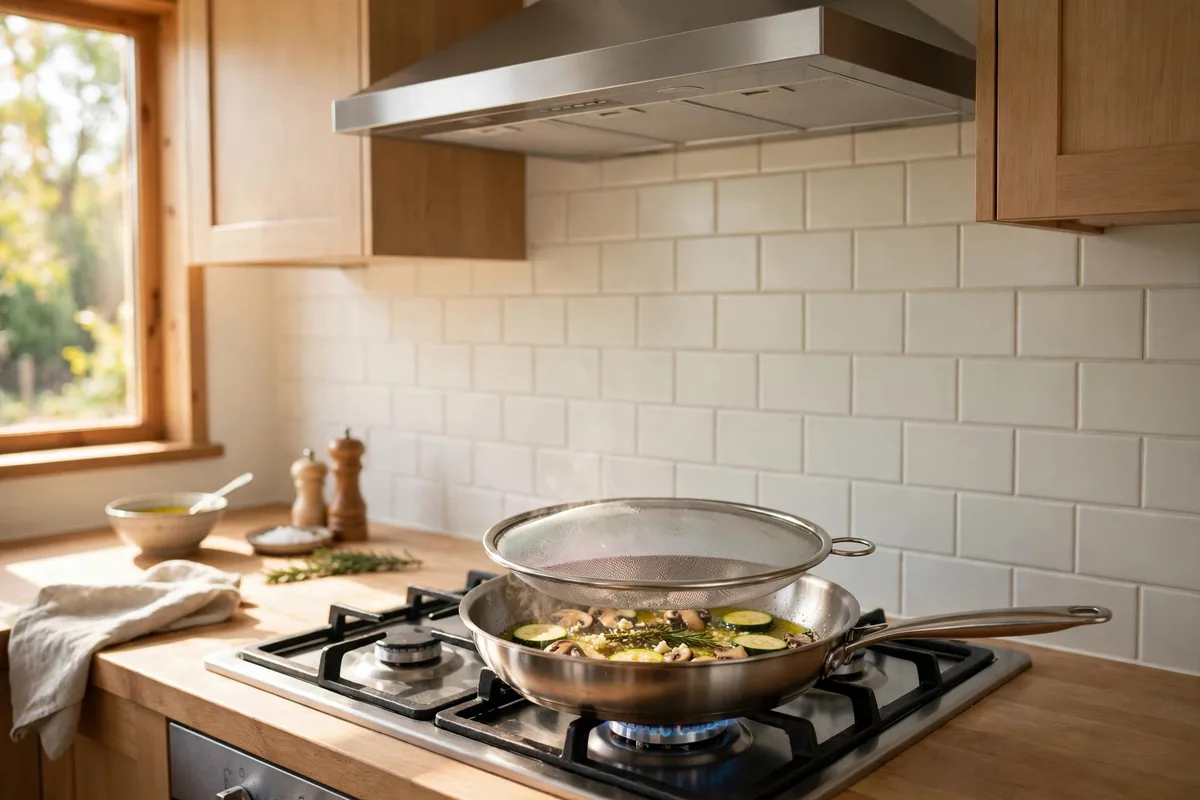
Short answer: Learning how to protect kitchen backsplash from grease is mostly about stopping the grease before it lands, then making the surface easy to wipe when some does. Use a lid or splatter screen when you fry, run the extractor while you cook, wipe splashes while the panel is still warm, and keep grout and porous stone sealed. No single product does the whole job — the protection comes from layering these small habits.
A backsplash takes the splashes so your wall does not have to, but it is not maintenance-free. Cooking oil leaves the pan as a fine mist as well as visible splatters: the mist settles as a thin film, dust sticks to it, and the next cooking session’s heat bakes it harder — and on grout and natural stone, oil soaks in and stains rather than sitting on top. Everything below follows the order the problem happens: stop grease at the pan, pull what escapes into the extractor, then protect the surface itself.
Why Grease Reaches the Backsplash — and Why Prevention Beats Scrubbing
Two kinds of grease need two different defences. Direct splatter is the visible kind: droplets thrown from a frying pan by bubbling oil, spitting bacon or a rolling boil, landing close to the hob. Airborne grease is invisible: a vapour of tiny oil particles that rises with steam, drifts onto the panel and wall units, and condenses into a film. A splatter screen catches the first, not the second; the extractor handles the second, not the first — so this guide layers both.
Prevention also wins on effort: fresh grease wipes off with a damp cloth, while baked-on grease needs soaking and patience — and hard scrubbing is what damages grout, stone, steel and acrylic.
Stop the Splatter at the Pan
The cheapest protection is stopping the droplets at the pan. Three habits do most of this work.
Use a lid or a splatter screen when frying
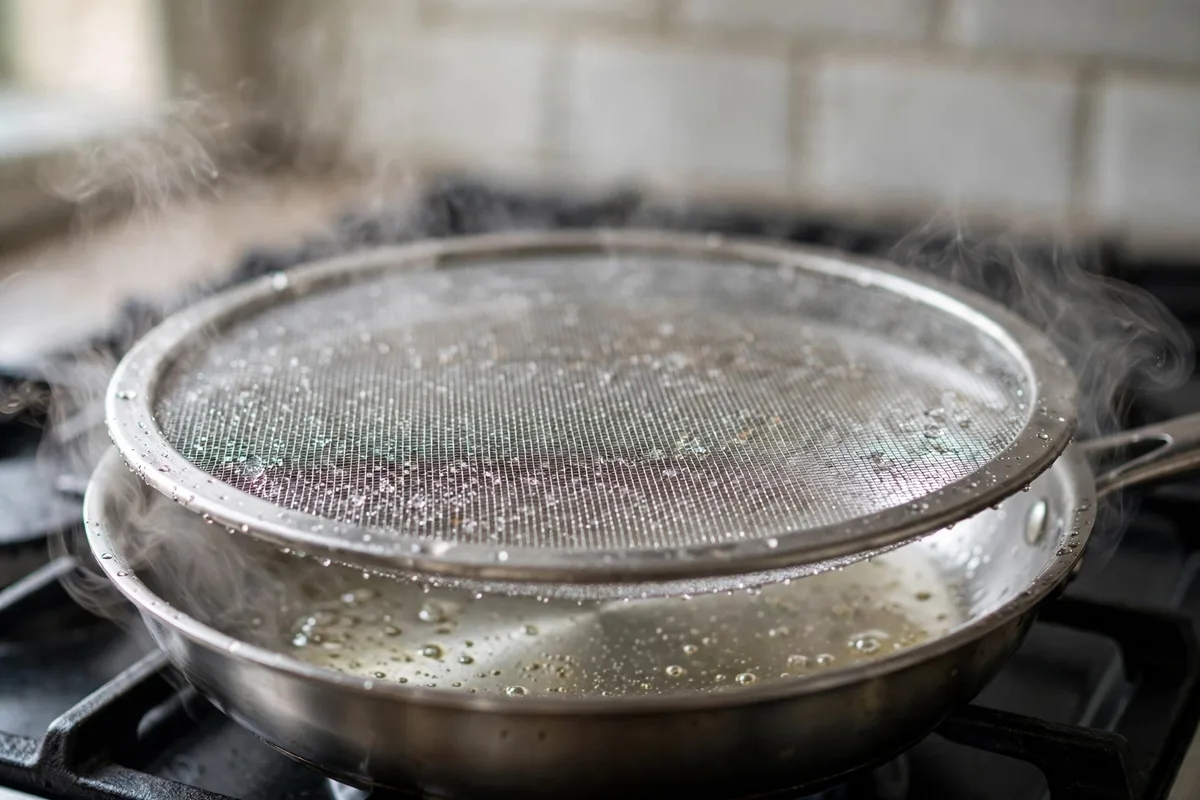
A fine-mesh splatter screen sits over the pan and blocks oil droplets while letting steam escape, so food keeps frying rather than steaming — use it for bacon, burgers, chicken and anything shallow-fried. A lid traps more splatter but also traps steam; it suits simmering sauces and soups, and can rest slightly ajar for evaporation. Match the screen or lid to the pan: a smaller one leaves a gap for droplets to escape through.
Match the pan, the heat and the oil to the job
Splatter worsens when a small pan crowds food, the heat is higher than the cooking needs, or there is more oil than the recipe calls for. Use a pan wide enough that pieces are not piled up, heat oil steadily rather than blasting it, and centre the pan so gas flames heat the base instead of licking up its sides. Pat food dry before it goes into hot oil where the recipe allows: surface water makes hot oil spit hardest.
Wipe splashes while the panel is still warm
Straight after cooking, while the backsplash is warm but the hob is off and safe to approach, a quick pass with a damp microfibre cloth and a drop of dish soap lifts the day’s splatter in under a minute, before heat and time bake it on. This one habit does more than any product on this page.
Use Ventilation Properly: The Extractor Is a Grease Barrier
The extractor is your defence against the airborne film — but only when it is running and its filter is not already saturated.
Turn it on early, and let it run on
Switch the extractor on a minute or two before the pan starts producing steam and oil vapour, not after the kitchen already smells of frying, and leave it running for a few minutes after you finish. Match the speed to the cooking: a gentle simmer needs little; frying and searing need the higher settings. A hood that vents outside removes grease-laden air entirely; a recirculating hood traps some grease in its filters and returns the air, which makes filter condition even more important.
Keep the grease filter clean
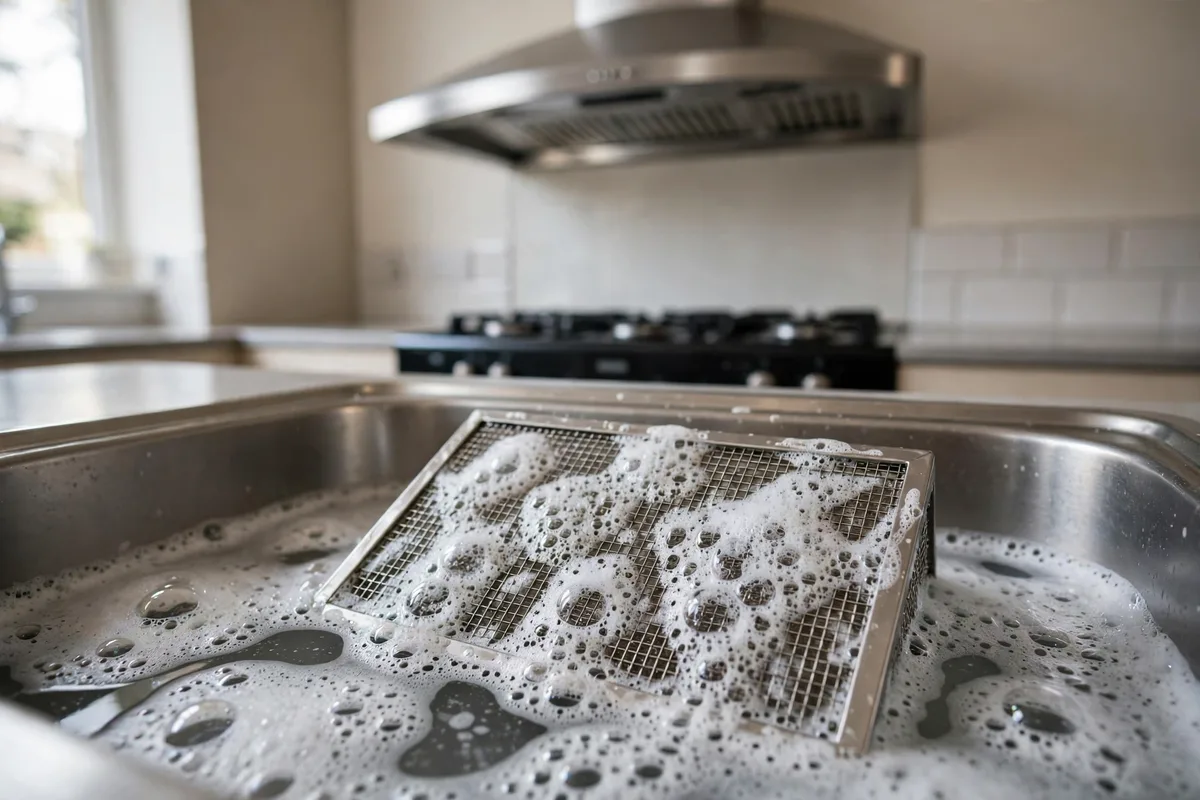
A clogged mesh filter cannot trap more grease — vapour passes around it and lands on the backsplash and cupboards — and manufacturers warn that grease-saturated filters are also a fire risk. Metal mesh filters are washable: hood manuals (GE and Miele among them) describe cleaning them in hot water with mild detergent or in the dishwasher, at intervals from every few weeks for heavy frying to a few times a year for light use; your own manual wins. Dry the filter completely before refitting. Charcoal filters in recirculating hoods are not washable and must be replaced when they stop controlling odours, typically every 6–12 months per manufacturer guidance.
Protect the Backsplash by Material
Once splatter lands, the harm it does — and the protection that helps — depends on the material. Quick reference first, notes below.
| Material | Main grease risk | Best protection | Avoid |
|---|---|---|---|
| Glass | Film shows as streaks and dull patches | Warm wipe after cooking; rinse and buff dry | Scouring powders, gritty creams, abrasive pads |
| Glazed tile and grout | Grease soaks into porous grout and darkens it | Seal grout lines; soft brush for grout, cloth for tile | Grease left sitting on grout; sealing over dirty grout |
| Stainless steel | Film and fingerprints cloud the brushed finish | Wipe along the grain; dry after washing | Chloride cleaners, bleach, steel wool, circular scrubbing |
| Natural stone | Oil soaks in and stains; acid etches | Keep sealed (water-drop test below); wipe spills promptly | Vinegar, lemon, acidic cleaners; abrasive pads |
| Acrylic and laminate | Soft surface scratches, then traps grime | Dish-soap wash only; soft cloths; dry after cleaning | Baking soda paste, scouring pads, abrasive creams |
Glass
Glass is non-porous, so grease cannot soak in — protection is not giving the film time to bake on: warm wipe, rinse, dry buff. The real risk is the cleaning itself: abrasives leave fine, permanent scratches that show whenever light hits the panel.
Tile and grout
Glazed tile behaves like glass, but the grout between the tiles is porous, sits slightly recessed, and is where backsplashes actually stain. Protection for a tiled backsplash is therefore mostly grout protection: keep the grout sealed (next section), use a soft brush along the lines when you clean, and do not let splashes sit on the grout behind the hob for days.
Stainless steel
Steel does not absorb grease, but its brushed grain shows every film and fingerprint. Wipe along the grain, never across it or in circles — steel manufacturers’ care guidance (John Boos, True Manufacturing) is consistent on this, and on avoiding chloride cleaners, bleach and steel wool, which attack the surface’s protective layer and can cause pitting and rust marks. Wash with a soft cloth and mild, non-chloride detergent; rinse and dry.
Natural stone
Marble, granite and other natural stone are the most vulnerable materials here: porous, so oil left sitting can soak in and stain permanently, and etched by acidic cleaners. Protection is a maintained seal (below), prompt wiping, and pH-neutral or mild dish-soap cleaning only. The Natural Stone Institute is clear that sealing makes stone more stain-resistant, not stain-proof — it buys time to wipe up, not permission to leave spills.
Acrylic, laminate and peel-and-stick surfaces
These are the softest surfaces in the kitchen, scratch the easiest, and scratches then trap grease and grime. Protect them by cleaning with the dish-soap wash only — no baking soda paste, no scouring pads, no abrasive creams — and keep direct heat in mind: adhesive-backed and plastic surfaces have heat limits, covered below.
Seal Grout and Stone: The Invisible Layer That Buys You Time
A penetrating sealer soaks into grout or stone and fills the pores, so grease sits on top instead of soaking in. It is the most effective protection for porous backsplashes — as long as you understand its limits.
What sealer can and cannot do
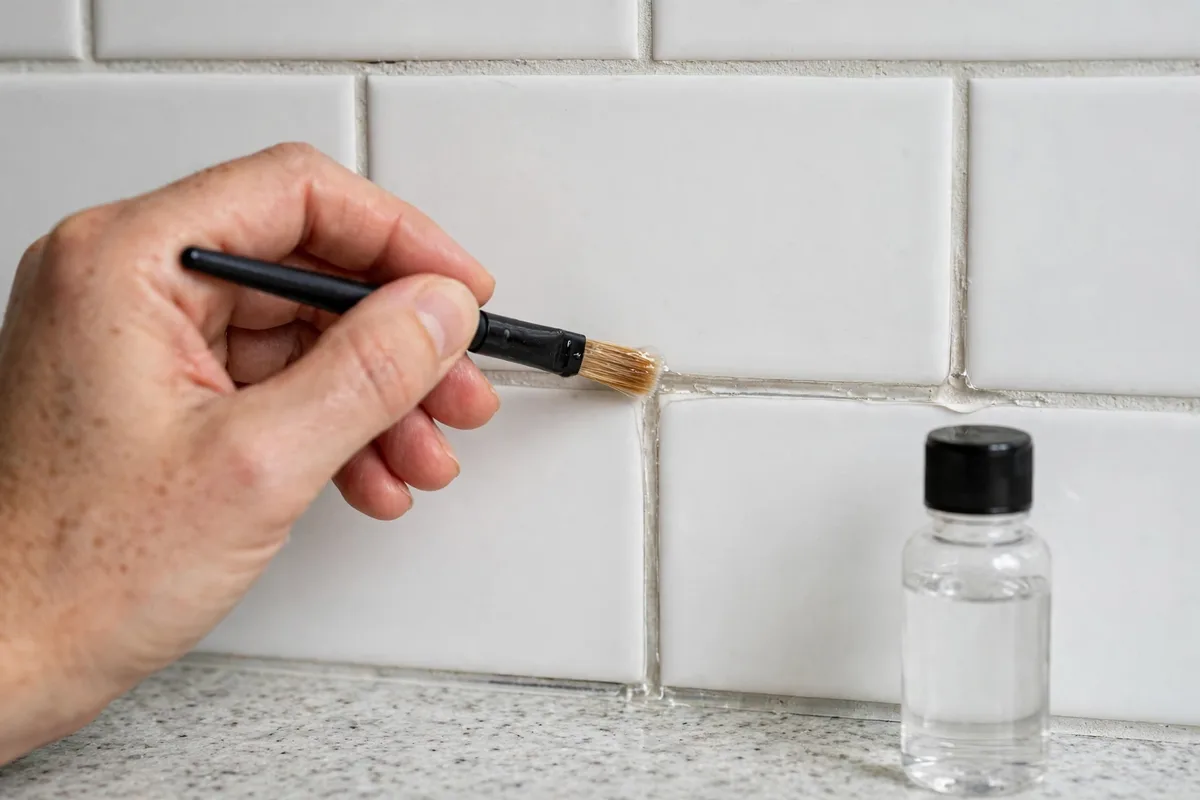
Sealer does not make grout or stone immune to grease. It slows absorption, converting a permanent stain into a wipeable spill — but a splash left for days will still get through, and sealing over dirty grout traps existing grease under the seal. Clean and fully dry the grout first, and follow the product’s curing instructions (Custom Building Products’ TileLab data sheet, for example, specifies clean, dry grout, 48–72 hours after new grout was installed, and a test in an inconspicuous area first).
The water-drop test
Put a few drops of water on a grout line or on the stone and watch: if the water beads and the surface does not darken, the sealer is still working. If it soaks in and darkens the grout or stone within a few minutes, the protection has worn off and it is time to reseal. Tile industry guidance recommends testing sealed surfaces about every two years; the area behind the hob, which takes the most grease and cleaning, is worth testing whenever it starts darkening faster than the rest.
How often to reseal
There is no universal interval: sealers wear at different rates depending on the product, the cooking and the cleaning. Manufacturer guidance for penetrating sealers generally puts reapplication in a one-to-three-year range for indoor surfaces, with the water test as the decider. Epoxy grout is the exception — non-porous, it needs no sealing at all.
Removable Protectors, Guards and Films — With Their Real Limits
If habits and sealing are not enough — a rental kitchen, a porous backsplash, a household that fries daily — a removable barrier can take the splatter instead of the wall. Optional extras, each with limits that matter.
Folding splatter guards
A folding metal splatter guard stands on the hob around the back and sides of the pan and intercepts direct splatter before it reaches the panel. It does nothing against airborne film, so it complements the extractor rather than replacing it. Keep it clear of flames and burner controls, let it cool before handling, and wipe it after use.
Clear films and peel-and-stick protectors
Clear adhesive films and peel-and-stick tiles promise a wipeable, replaceable skin over an existing backsplash, and for smooth surfaces away from direct heat they can work. Their verified limits are the catch. One maker’s clear PVC film states a maximum temperature of 70 °C, no flame contact, and 20 cm+ from the heat source in use. Art3d states its peel-and-stick tiles resist stovetop heat but, behind a gas stove, must sit at least 16 inches from the burner — or not be used behind gas at all. Check the specific product’s limits: a film fine behind induction may be unsuitable behind gas, and no adhesive film belongs over stone or textured surfaces.
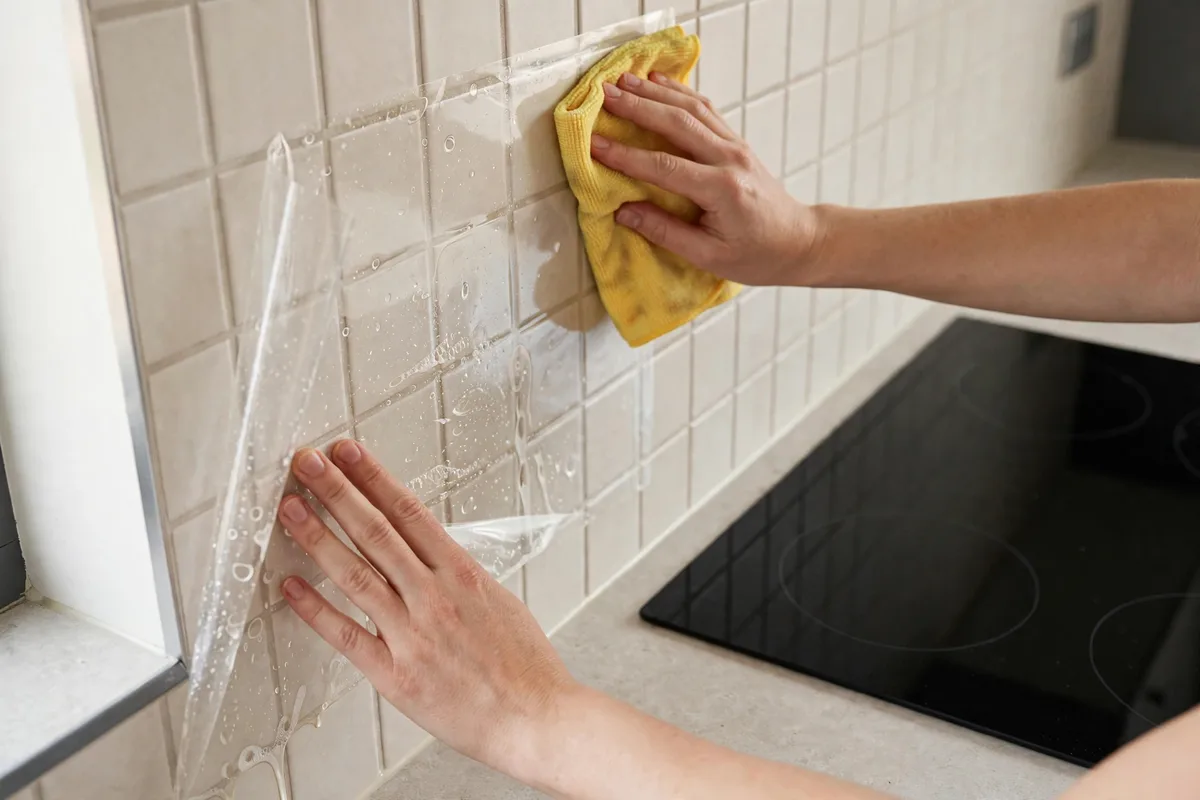
Tempered-glass panels
A tempered-glass panel fitted over the hob zone is the heavy-duty version of the same idea: a smooth, non-porous, heat-resistant shield (makers specify tempered glass precisely because ordinary glass is not heat-safe) that wipes clean like a glass backsplash. It is semi-permanent rather than renter-friendly, must be sized for the hob, and still needs the warm-wipe habit — it protects the wall behind it, not itself.
The Habits That Keep It Protected Day to Day
Protection is a routine, not a one-off job:
- Every time you cook: extractor on, lid or splatter screen for frying, warm wipe of the backsplash afterwards.
- Weekly: wash the hob zone with hot water and dish soap, rinse and buff dry, so the invisible film never gets a head start.
- Monthly, or as your hood manual directs: wash the extractor’s grease filter; check the grout behind the hob for darkening.
- Once a year or so: water-drop test on grout and stone; reseal only where the test fails. Repair cracked tiles, grout and silicone joints — a crack is a channel for grease and water to get behind the surface.
If grease has already built up into a tacky film, protection alone will not shift it — clean first, then protect, because sealing or filming over old grease locks the problem in. Our step-by-step guide on how to clean a kitchen splashback covers the degreasing routine and the material-by-material differences.
What to Avoid: Habits and Products That Make Things Worse
- Sealing dirty grout or stone. Sealer locks in whatever is in the pores. Clean, rinse and dry fully first.
- Scrubbing harder instead of wiping sooner. Abrasive pads and gritty creams permanently scratch glass, steel and acrylic and wear grout away.
- Acidic cleaners on stone. Vinegar and lemon etch marble and granite; no protective seal makes acid safe on stone.
- Chloride cleaners and bleach on stainless steel. They attack the protective surface layer and can cause pitting and rust staining.
- Films and peel-and-stick products beyond their heat limits. Exceeding a protector’s stated temperature or distance limits risks peeling, discoloration and a much harder removal — check the manufacturer’s numbers, not the marketing headline.
- Running the extractor with a saturated filter, or not at all. Unextracted airborne grease lands on the backsplash, cupboards and ceiling instead.
Frequently Asked Questions
How do I stop grease from splattering on my backsplash when I cook?
Combine the three defences: a lid or fine-mesh splatter screen over the pan, the extractor running from just before you start until a few minutes after you finish, and a warm wipe straight after cooking. None of the three covers both direct splatter and airborne film alone.
Does sealing grout stop grease stains completely?
No. A penetrating sealer fills the pores in cement grout so grease sits on the surface long enough to be wiped off instead of soaking in. It buys time; it does not make grout stain-proof, and it cannot protect grout sealed while already dirty.
How often should backsplash grout be resealed?
When the water test says so: drops that bead without darkening mean the sealer is working; drops that soak in and darken the grout within a few minutes mean reseal. Manufacturer guidance for penetrating sealers typically lands in a one-to-three-year range indoors; tile industry guidance suggests testing about every two years.
Can I put a peel-and-stick backsplash or protector film behind a gas stove?
Only within the product’s stated limits, and sometimes not at all: one clear PVC film caps itself at 70 °C with no flame contact and 20 cm+ from the heat source, while one peel-and-stick tile maker requires 16 inches from a gas burner or says not to use its tiles behind gas at all. No stated rating and distance means treat it as unsuitable for the hob zone.
What is the easiest backsplash material to protect from grease?
Glass and glazed tile: non-porous, so grease sits on the surface and wipes off, and prompt wiping with non-abrasive cleaning is all the protection they need. Natural stone needs the most — a maintained seal, prompt wiping and pH-neutral cleaning — because oil stains it permanently and acid etches it.
Does a range hood really protect the backsplash?
Yes — against the airborne film, which a splatter screen cannot stop. The hood captures oil vapour before it settles, but only when switched on early enough and its grease filter is clean; a saturated filter lets vapour through, and manufacturers flag grease-loaded filters as a fire risk too.
Final Thoughts
Protecting a kitchen backsplash from grease is not a product you buy once; it is three layers working together. Stop splatter at the pan with lids, screens and sensible heat. Pull airborne grease away with an extractor whose filter you actually clean. Keep the surface defended — grout and stone sealed and water-tested, steel wiped with its grain, glass and acrylic kept away from abrasives. Do those, and the backsplash stays what it was meant to be: the easy-clean surface that protects the wall.

Hello! I’m trying to explore more and provide my readers with more. Besides being a writer, I’ve also worked as an Editor and Proofreader.