The most useful bathroom cleaning hacks are not the viral ones. They are the ones that match the cleaner to the surface, give it time to work, and never ask you to mix products that should stay apart. This guide keeps the methods from the original list that genuinely work — baking soda paste, a vinegar soak for mineral buildup, a proper grout scrub — corrects the ones that were wrong, and removes the ones that could damage your bathroom or your lungs. Everything is organized by area, so you can clean one zone at a time: shower, grout, glass, sink, then toilet.
A quick honesty note: several popular combinations have been deliberately left out. Baking soda and vinegar are each useful on their own, but mixed together they mostly neutralize each other — the fizz looks busy and cleans very little. And some mixtures are not just weak, they are dangerous. The safety section comes first for a reason.
Before You Start: The Safety Rules That Matter More Than Any Hack
Most home cleaning accidents come from combining products, not from using one product as directed. The Centers for Disease Control and Prevention (CDC) rule is plain: do not mix products or chemicals, follow the label, and ventilate. Apply it to everything in this guide.
Never mix these, in any combination
- Bleach with vinegar or any acid (including many toilet-bowl, rust and limescale cleaners): releases chlorine gas.
- Bleach with ammonia (found in some glass and multi-purpose cleaners): releases toxic chloramine vapors.
- Bleach with any other cleaner or disinfectant at all: the CDC advice is broader than the famous pairs — bleach gets used alone, diluted only with water, exactly as its label directs.
- Hydrogen peroxide with vinegar: together they form peracetic acid, a corrosive irritant for eyes, skin and lungs. (The old version of this article combined them in one bucket; that advice is removed.) Each can be used alone, rinsed away before anything else is applied.
- Two drain cleaners, or a drain cleaner after a homemade mixture: never layer products in a drain.
Ventilate, label, and protect yourself
Run the exhaust fan or open a window before you start, and keep air moving while products dwell. Wear gloves for anything stronger than soap and water, eye protection when pouring or scrubbing overhead, and label any spray bottle you fill yourself. For mold, the US Environmental Protection Agency (EPA) advises extra caution if you have asthma, allergies or a weakened immune system — and a professional for large areas (its rule of thumb: more than about 10 square feet).
Know your surfaces before you choose a cleaner
Two material rules prevent most bathroom cleaning damage:
- No acids on natural stone. Vinegar, lemon and acidic descalers etch marble, travertine, limestone and other calcium-based stone, leaving dull marks that cannot be wiped away. Stone gets pH-neutral cleaner or mild soap and water only — this is standard stone-care guidance from fabricators and manufacturers.
- No abrasives on soft surfaces. Scouring powders, gritty pastes and stiff pads can scratch acrylic tubs, fiberglass, coated glass and some fixture finishes. Baking soda is a mild abrasive: use it with a soft sponge and light pressure, and skip it entirely on delicate or coated surfaces.
Whatever you try, test it on a small, hidden spot first, and rinse one product fully away before using another.
Cleaning is not the same as disinfecting
Cleaning removes dirt and most germs with soap and water; disinfecting kills germs with a registered product, and is mainly needed when someone is sick. Vinegar and baking soda are cleaners, not disinfectants, whatever social media claims. If you disinfect, clean first, then respect the product’s full contact time.
Shower and Tub: Soap Scum, Film and Mildew
Soap scum — a film of soap residue, body oils and water minerals — responds to order more than force: soften it, wash it, then scrub what is left.
Start with hot water and dish soap
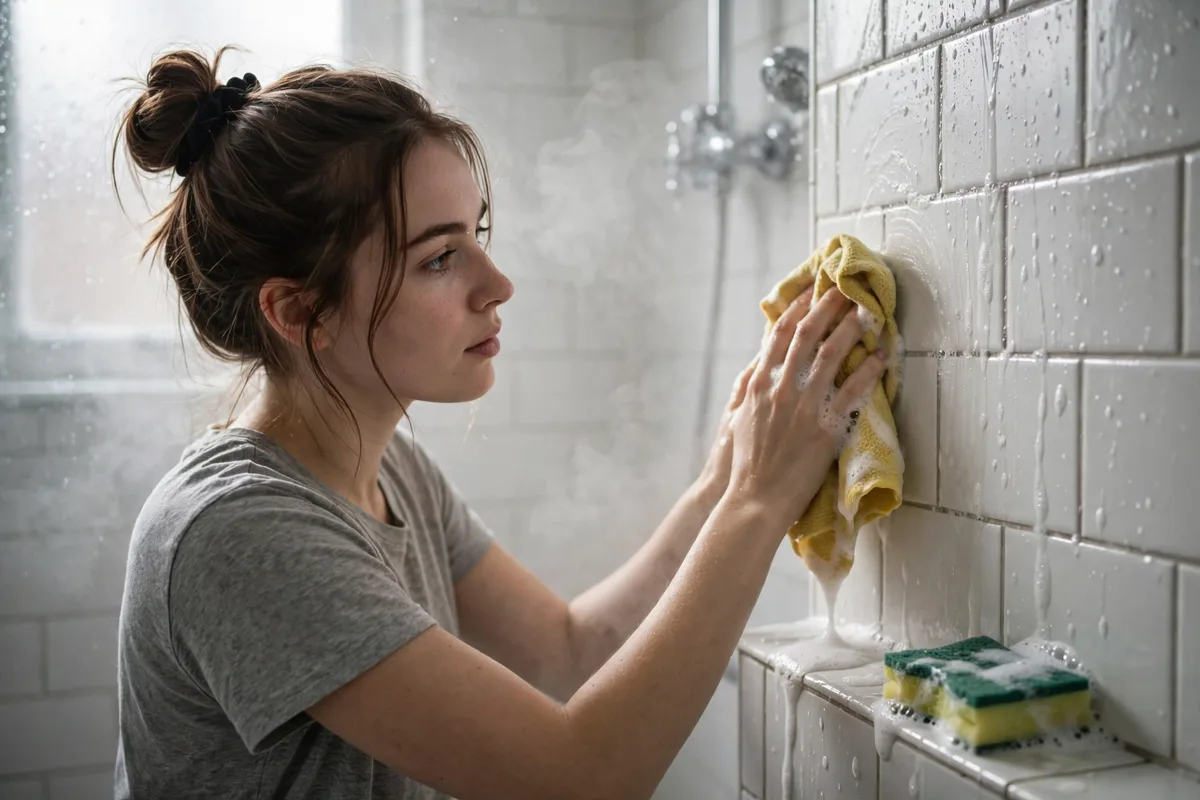
Run the shower hot for a minute to warm and wet the walls and tub. Wipe everything down with hot water and a few drops of dish soap on a microfibre cloth or non-scratch sponge. Dish soap is made to cut grease and body oils, and this first pass removes the fresh layer so later steps only deal with real buildup. Rinse well — cleaner left behind dries into a new film that grabs dirt faster.
Use baking soda paste on tub rings and stubborn film
For the grey ring around a tub or shower floor, mix baking soda with a little water into a paste, leave it for about ten minutes, work it gently with a soft sponge, and rinse. Keep pressure light on acrylic and fiberglass; on stone surrounds use mild soap and water instead.
Wash the shower curtain or liner instead of spraying it
The old fizz treatment for curtains has been replaced with what works: take the curtain or liner down and wash it. Many can go in the machine on a gentle cycle with regular detergent, or soak in warm soapy water and be sponged clean. Hang it back up to dry fully, and replace a liner that stays stained after washing — that is wear, not a cleaning failure.
Treat small mildew patches the EPA way
For small mold or mildew patches on hard surfaces, the EPA method is unglamorous: scrub with detergent and water, rinse, and dry completely. Fix the moisture and it stays away longer. If the stain is in the silicone itself, cleaning will not restore it — the bead needs renewing. Persistent moisture also attracts pests; if insects keep appearing around the tub or pipes, our guide to how to get rid of ants in the bathroom covers the entry points to check.
Make the squeegee the actual hack
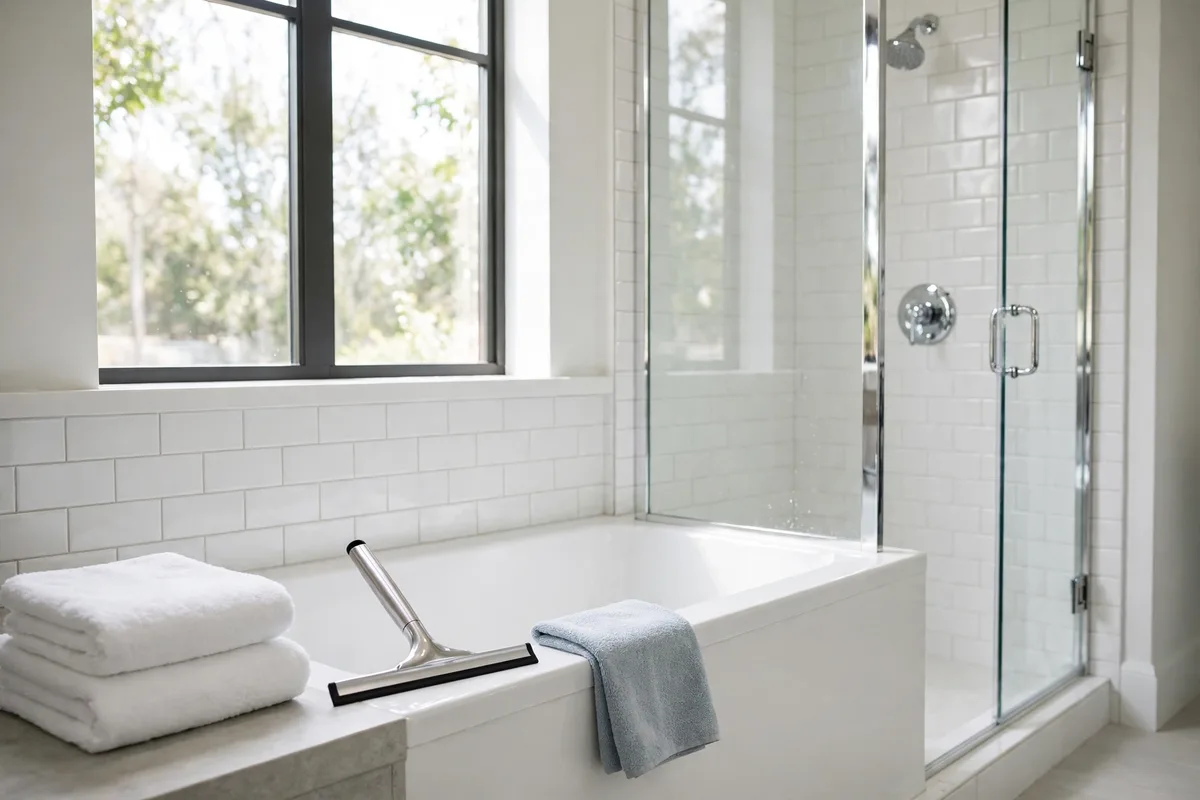
The single highest-value habit in this article: after the last shower of the day, run a squeegee over glass and tile and leave the fan on for around twenty minutes. Removing the water removes most of what becomes spots, scum and mildew food. It takes under a minute and does more than any product in the cupboard.
Grout: Clean It Gently, Then Keep It Sealed
Grout is porous cement, not tile. It stains because it absorbs, and it is damaged by hard abrasives and constant acid. Work gently, in this order.
Scrub with baking soda paste and a soft brush
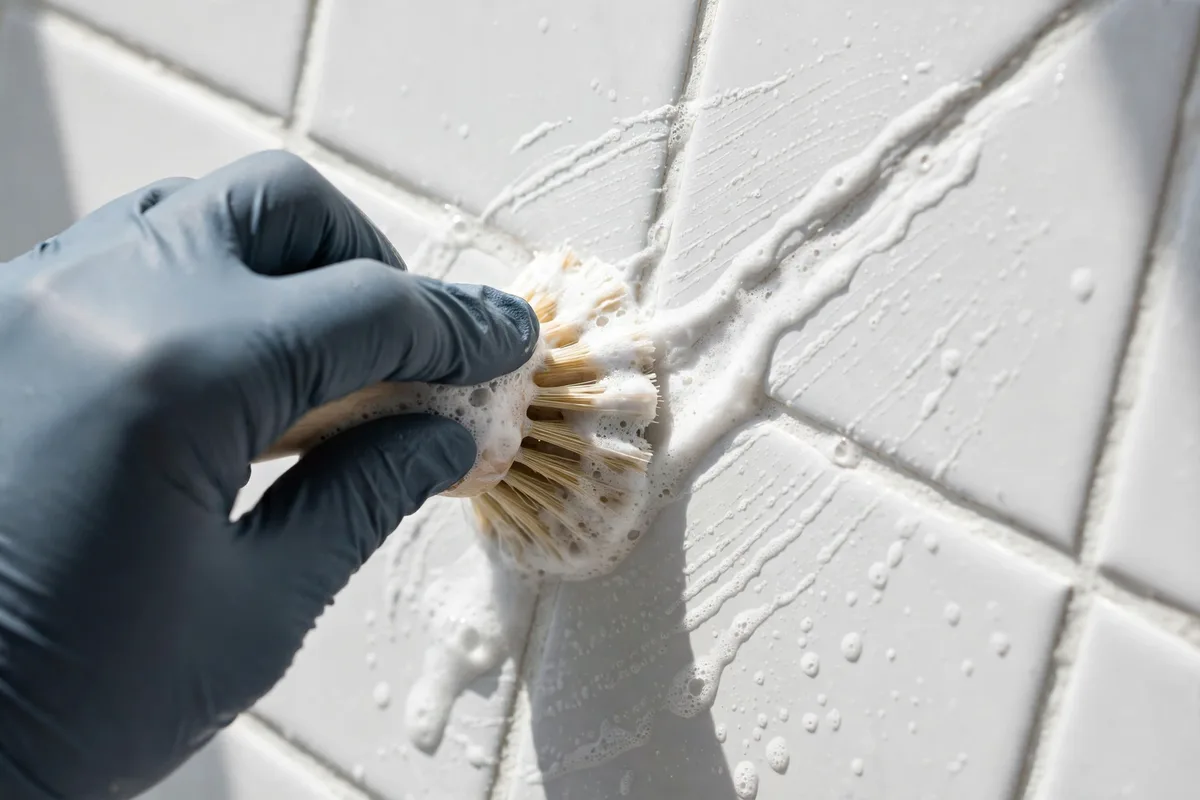
Wet the grout lines, apply a paste of baking soda and water, and leave it about ten minutes. Scrub with a soft toothbrush or grout brush — along the line, not across it — rinse with hot water and wipe dry. This handles everyday greying, and is worth repeating weekly rather than escalating.
Use hydrogen peroxide alone for whitening — with limits
For grout that stays discoloured after the paste scrub, ordinary 3% hydrogen peroxide, used on its own, can help lift staining on light grout. Apply, let it sit briefly, scrub and rinse. Never mix it with vinegar, test first (it can lighten coloured grout), and stop if the grout is crumbling — that is a repair, not a stain.
Seal sound grout, replace failed grout and caulk
Once cleaned grout is fully dry, a penetrating grout sealer, applied as its manufacturer directs, slows future staining. Sealer is protection, not a cure: cracked, soft or missing grout, and blackened silicone, should be renewed. Use vinegar on grout only occasionally and rinsed well — repeated acid attacks the cement.
Glass and Mirrors: Shower Doors, Showerheads and Streak-Free Finishes
Glass problems are usually two layers stuck together: a greasy soap film on top of mineral scale. Remove them in that order and the glass clears; attack the mineral first and the acid never reaches it.
Degrease shower doors with dish soap, then use a vinegar solution where suitable
Wash the door first with hot water and dish soap and rinse. Then, on plain glass only, spray equal parts white vinegar and water, leave it ten to fifteen minutes, wipe with a non-scratch sponge, rinse and buff dry. A little dish soap in that spray is a well-established variant for heavier scum. Never use it on stone surrounds, rinse it off metal tracks rather than letting it sit, and if the door has a manufacturer’s protective coating, follow the maker’s guidance — some coatings rule out vinegar entirely.
Soak the showerhead to clear mineral-clogged jets
When jets start firing sideways, mineral scale is usually the cause. If the showerhead unscrews, soak it in undiluted white vinegar for a few hours, then rinse and refit. If it is fixed, secure a vinegar-filled bag over the head so the face is submerged, for the same time. Run the water to flush — and skip this soak on any finish the maker warns against vinegar.
Clean mirrors with less product, not more
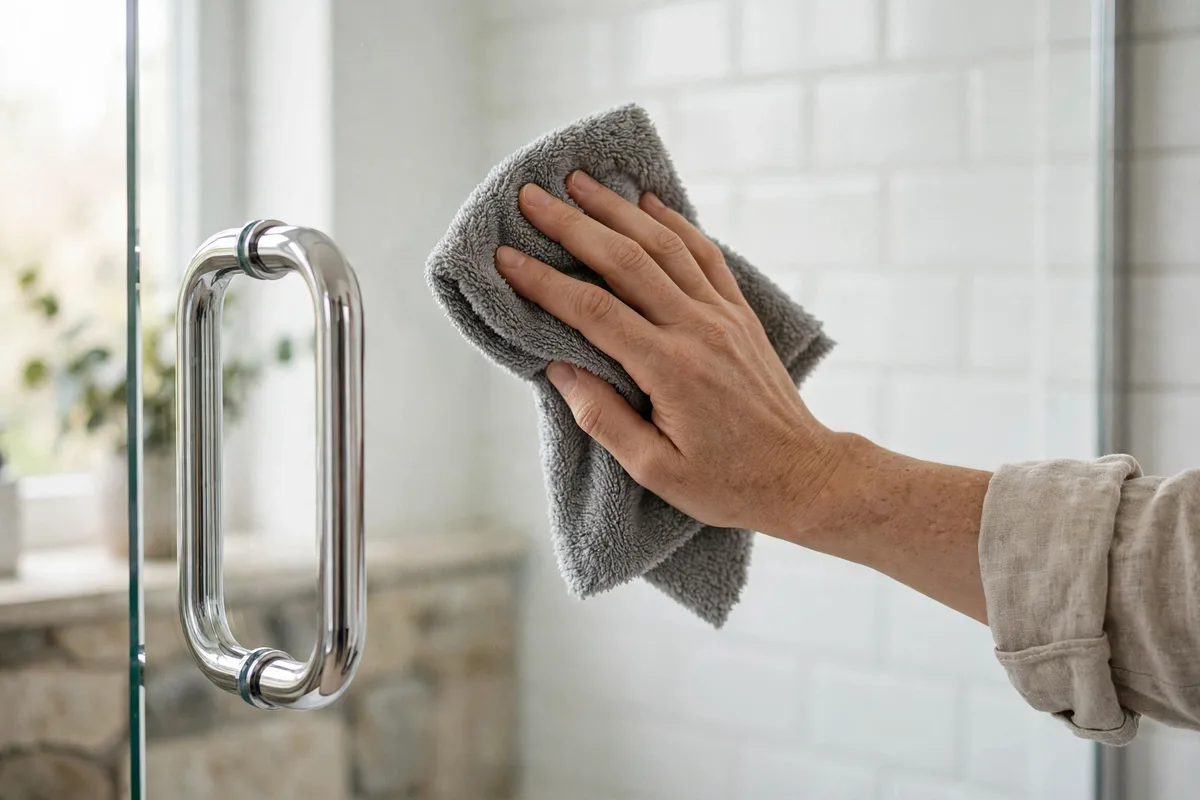
Most mirror streaks are leftover cleaner, not dirt. Spray a little glass cleaner — or plain water — onto a microfibre cloth rather than the mirror, wipe in an S pattern, then buff with the dry side. Keep spray off the edges and backing, where creeping moisture causes black edge spotting.
Sink and Fixtures: Basins, Faucets and the Drain
The sink collects toothpaste, soap and mineral spots daily, so it rewards little-and-often cleaning — a cloth kept under the basin earns its place here.
Scrub the basin with paste or soapy water, matched to the material
Porcelain and enamel basins take the baking soda paste well: apply, wait a few minutes, scrub softly, rinse and dry. For stone, skip pastes and acids — mild soap, water, rinse, dry. Clear the drain rim and overflow slot with the toothbrush; that hidden ring is where much of the smell starts.
Lift faucet mineral crust with a vinegar wrap — chrome and steel only
For the chalky crust where a faucet meets the basin, wrap it in a vinegar-soaked cloth for about thirty minutes, then wipe and buff dry. This suits standard chrome and stainless. Do not use it on specialty, matte or living finishes without checking the manufacturer’s care instructions, and never leave acid sitting on stone counters beneath.
Polish fixtures by drying them, not by abrading them
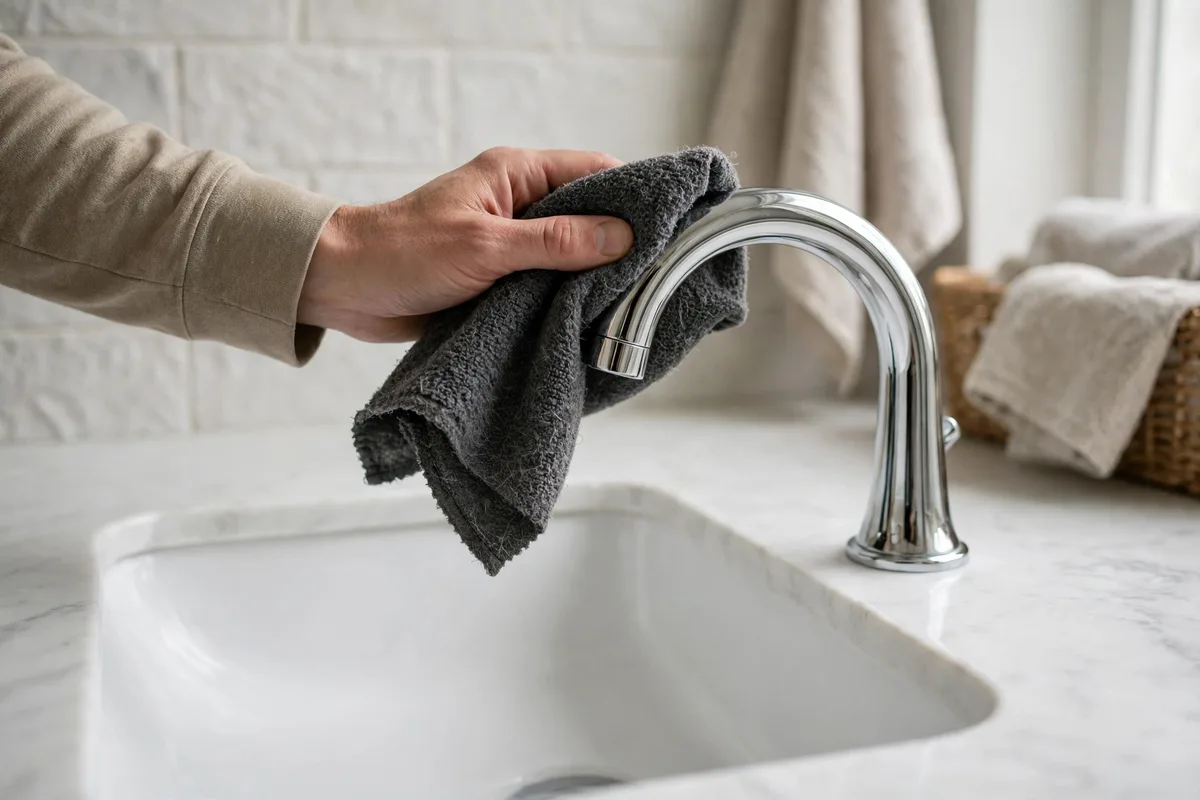
The toothpaste-as-polish tip has been removed: toothpaste is an abrasive, and on modern fixture finishes it can dull exactly the shine you are trying to restore. What works is boring and safe — wash with soapy water, rinse, and buff completely dry with a microfibre cloth. Water left standing is what spots chrome; a dry faucet stays bright far longer than a polished-but-damp one.
Clear a slow drain mechanically, not with fizz
A bathroom sink drains slowly because of hair and soap caught below the stopper — and no fizzy mixture dissolves hair. Lift the stopper out, pull the clog free with a small drain tool or a gloved hand, and flush with hot water. A hair catcher prevents the repeat. Deeper blockages need a hand snake, then a plumber. Skip boiling water, and never follow a homemade attempt with a chemical drain cleaner.
Toilet: Bowl, Rim and Exterior, in the Right Order
Clean the bowl with a product made for the job, the exterior with a separate cloth, and never let toilet chemicals meet each other.
Use a toilet bowl cleaner as its label directs
Apply bowl cleaner under the rim and around the bowl, let it sit for the label’s contact time, scrub — working under the rim jets — then flush. If someone is ill, use an EPA-registered disinfecting bowl product. One absolute rule: acidic bowl cleaners and bleach must never meet, including bleach tablets in the tank. Flush thoroughly when switching products.
Use a vinegar soak for a mineral ring — on its own
For the hard-water ring, pour a couple of cups of white vinegar into the bowl, swish it onto the ring, and leave it an hour or overnight before scrubbing and flushing. For deposits above the waterline, vinegar-soaked paper towels pressed to the porcelain keep the acid in contact. This replaces the old mixture method: vinegar alone does the mineral work, the mixture cancelled itself out, and boiling water has no place in a porcelain bowl. Flush well before any bleach-based product is used.
Reserve the wet pumice stone for porcelain only
For a ring that survives soaking, a cleaning pumice stone can rub deposits away — kept wet, the porcelain kept wet, light pressure. Test a small area first, and never use it on coloured, coated or plastic fixtures, which it will scratch.
Wipe the exterior top to bottom, seat and hinges included
With a separate cloth and a cleaner used as directed, wipe the tank, handle, lid, seat top and underside, hinges, the outside of the bowl and the base, then the floor around it. Splashes at the base are a common odour source that bowl cleaning never touches. For room-wide odour, see our guide to how to make your bathroom smell good.
Habits That Keep the Bathroom Cleaner for Longer
- Squeegee after the last shower and run the fan for about twenty minutes afterwards; drying is prevention, not tidying.
- Wipe the sink and faucet dry when you see splashes — ten seconds now, or a mineral crust later.
- Keep one product per job. A small, labelled kit — dish soap, baking soda, white vinegar, a bowl cleaner, a registered disinfectant for illness — covers this entire guide.
- Wash towels without fabric softener. Softener coats towel fibres with a water-repellent film that reduces absorbency and traps odour — the old tip in this article recommending a fabric-softener soak did the opposite of what it promised. Wash towels with detergent alone, make sure they dry fully between uses, and hang them spread out, not bunched.
- Clean in a weekly order: mirrors and sink first, shower and tub next, toilet last, floor on your way out — one set of cloths never travels from the toilet to anywhere else.
Bathroom Cleaning Mistakes Worth Stopping
| Mistake | Why it fails or harms | Do this instead |
|---|---|---|
| Mixing bleach with vinegar, ammonia or other cleaners | Releases chlorine or chloramine gases | One product at a time, exactly as labelled, with ventilation |
| Mixing hydrogen peroxide with vinegar | Forms peracetic acid, a corrosive irritant | Use each alone, rinsing between products |
| Mixing baking soda and vinegar as a “power cleaner” | They neutralize each other; the fizz cleans very little and cannot unclog a drain | Use each separately for the jobs above; clear drains mechanically |
| Vinegar on marble, travertine or other stone | Acid etches the surface permanently | pH-neutral cleaner or mild soap and water |
| Toothpaste, scouring powders or gritty scrubbing on fixtures and acrylic | Abrasion dulls finishes and scratches soft surfaces | Soapy water, a soft sponge, and buffing dry |
| Fabric softener on towels | Coats fibres, cuts absorbency, traps odour | Detergent alone; dry towels fully between uses |
Frequently Asked Questions
What is the safest way to clean bathroom grout?
A paste of baking soda and water, scrubbed along the lines with a soft brush, rinsed and dried. It is gentle on the cement, works on everyday staining, and can be repeated weekly. For whitening light grout, 3% hydrogen peroxide used on its own is the next step — never mixed with vinegar.
Can I clean a shower door with vinegar?
Yes, on plain glass: wash first with hot water and dish soap, then spray equal parts white vinegar and water, leave ten to fifteen minutes, wipe, rinse and buff dry. Keep the solution off natural stone, rinse it off metal tracks, and check the maker’s guidance first if the glass has a protective coating.
How do I clean a showerhead with vinegar?
Unscrew it and soak it in undiluted white vinegar for a few hours, or secure a vinegar-filled bag over a fixed head for the same time. Rinse, refit, and run the water to clear the jets. Skip the soak on any finish the manufacturer says to keep away from vinegar.
Does baking soda and vinegar unclog a bathroom drain?
No. The two neutralize each other, and the resulting fizz cannot dissolve the hair and soap that block bathroom drains. Lift the stopper and pull the clog out, use a hair catcher to prevent the next one, and use a hand snake or a plumber for deeper blockages.
How do I get rid of mould in the bathroom?
For small patches on hard surfaces, scrub with detergent and water, rinse and dry completely — the EPA method — and fix the moisture source, usually ventilation. Clean more often and run the fan after showers to keep it from returning. Large areas, mold inside walls, or households with asthma or immune concerns call for a professional.
What should I never mix with bleach?
Anything. Bleach plus vinegar or other acids releases chlorine gas; bleach plus ammonia releases chloramine vapors; and the CDC advises never mixing bleach or disinfectants with other cleaners at all. Use bleach alone, diluted with water only, as its label directs, in a ventilated room.
Why do my towels smell musty even after washing?
Usually a combination of residue and incomplete drying: fabric softener and excess detergent coat the fibres and trap odour, and towels hung bunched in a steamy bathroom stay damp. Wash with detergent alone, skip softener, and dry towels fully, spread out, between uses.
Final Thoughts
Good bathroom cleaning hacks turn out to be unglamorous things done in the right order: one product at a time, soap and water before anything stronger, baking soda paste where mild abrasion helps, vinegar only where acid is safe, and drying — always drying — at the end. Drop the mixtures and miracle claims, keep the squeegee by the shower and the fan running a little longer, and the deep clean becomes a rare event instead of a standing weekend appointment.

Hello! I’m trying to explore more and provide my readers with more. Besides being a writer, I’ve also worked as an Editor and Proofreader.