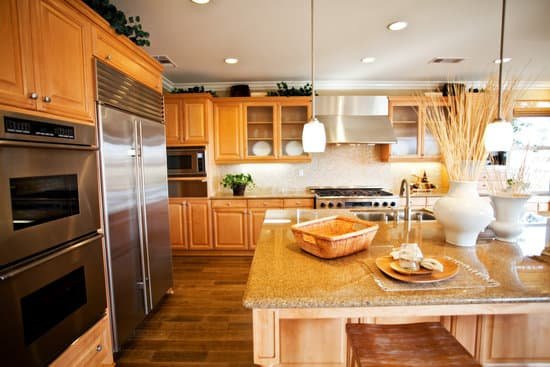
How to Organize a Small Kitchen can feel challenging when countertops, cabinets, drawers, and shelves are filled with cookware and everyday essentials. The good news is that you do not need a large kitchen to create an organized and functional space.
With the right storage solutions and a few simple organization habits, you can make better use of every inch of your kitchen. From vertical shelving and drawer dividers to rolling carts and cabinet organizers, there are plenty of practical ways to create more storage without making your kitchen feel cluttered.
In this guide, HomeKitchenWorld shares 25 practical small kitchen organization ideas to help you save space, reduce clutter, and make everyday cooking easier.
Why Is It Important to Organize a Small Kitchen?
When kitchen storage is poorly organized, even a few everyday items can make the entire room feel messy. Pots may be difficult to reach, spices can disappear into cabinets, and countertops can become crowded with appliances and utensils.
An organized kitchen helps you make better use of limited storage space, keep frequently used items within easy reach, reduce countertop clutter, and find cookware and ingredients faster.
The key is to think vertically, use hidden spaces, and give every item a designated place. If you are planning to improve your cabinet storage, you can also read our guide on How Many Cabinets in an Average Kitchen? to better understand how cabinet space can be planned according to your kitchen size and storage needs.
1. Use Wall-Mounted Shelves
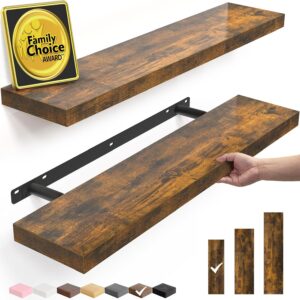
Walls are often overlooked when organizing a small kitchen. Installing floating or wall-mounted shelves can turn unused wall space into valuable storage without taking up additional floor or countertop space.
Use shelves for spices and seasonings, small jars, coffee and tea supplies, plates, bowls, frequently used cooking utensils, and decorative kitchen items.
Place the items you use most often on easily accessible shelves and reserve higher shelves for things you use less frequently. Open shelving works especially well when you want everyday kitchen essentials to remain visible and easy to reach.
2. Add a Small Kitchen Storage Cabinet
A compact cabinet, sideboard, or storage unit can provide additional space without requiring a complete kitchen remodel. Use drawers and shelves to organize plates, glasses, tableware, baking ingredients, kitchen linens, and small appliances.
When choosing additional cabinetry, measure the available floor space carefully. A narrow cabinet can provide useful storage while still leaving enough room to move comfortably around the kitchen.
If you are considering adding or replacing cabinets, our guide on How Many Cabinets in an Average Kitchen? can help you think about cabinet quantity, available space, and everyday storage requirements
3. Install Drawer Dividers
Kitchen drawers can become messy very quickly when utensils are placed together without any organization. Drawer dividers create separate sections for different items and make everything easier to find.
You can create dedicated spaces for spoons, forks, knives, measuring spoons, peelers, can openers, and small cooking tools.
Adjustable dividers are particularly useful because they can be customized to fit different drawer sizes. If you are designing a new kitchen or wondering how much drawer storage you actually need, check out our guide on How Many Drawers Should a Kitchen Have?.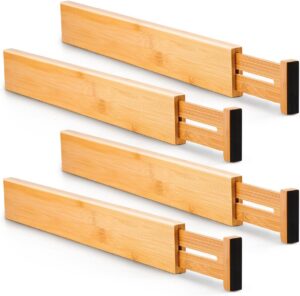
4. Organize Pots and Pans With a Rack
Pots and pans often take up a large amount of cabinet space. Instead of stacking everything together, use a vertical pan organizer or rack to separate cookware.
A rack can help organize frying pans, saucepans, baking trays, pot lids, and cutting boards. Keeping cookware separated also makes it easier to grab the item you need without moving an entire stack.
For frequently used cookware, consider placing the rack near your cooking area. This makes meal preparation faster and keeps your cabinets from becoming overcrowded.
5. Keep Kitchen Countertops Clear
One of the easiest ways to make a small kitchen appear larger is to reduce countertop clutter.
Keep only the appliances and tools you use regularly on the counter. Store less frequently used items inside cabinets, drawers, or dedicated storage areas.
A clear countertop gives you more preparation space and makes cleaning easier. It also creates a cleaner visual appearance, which can make a compact kitchen feel more spacious.
6. Try a Rolling Kitchen Island
If you do not have enough counter space for food preparation, a rolling kitchen island can be a practical solution.
A compact rolling cart can provide extra preparation space, additional shelves, storage for cookware, space for kitchen appliances, and a movable serving surface.
The biggest advantage is that you can move it when you need more floor space. This makes a rolling island particularly useful for small kitchens where permanent furniture may take up too much room.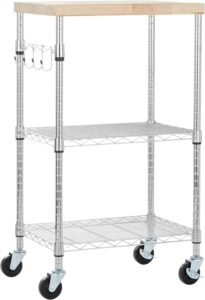
7. Hang Pots and Pans
Vertical storage can make a major difference in a small kitchen. Use a sturdy wall rail, hooks, or an appropriate hanging rack to store pots and pans.
This frees up cabinet space while keeping frequently used cookware accessible. However, make sure any wall-mounted storage is securely installed and suitable for the weight of the cookware.
You can also use suitable hooks for lightweight kitchen utensils, measuring cups, or other cooking accessories that you use regularly.
8. Create a Dedicated Spice Area
Spices can quickly take over a cabinet or countertop. Instead of storing them randomly, create a dedicated spice zone.
You can use wall-mounted spice shelves, drawer organizers, tiered spice racks, cabinet-door organizers, or small containers with labels.
Keep everyday spices in the most accessible location, preferably close to your main cooking area. Grouping spices together will make it much easier to find what you need while preparing meals.
9. Use a Lazy Susan Inside Cabinets
Deep kitchen cabinets often contain unused space because items at the back are difficult to reach.
A Lazy Susan can solve this problem by allowing you to rotate stored items toward you. It works particularly well for sauces, oils, spices, condiments, canned goods, and baking supplies.
This simple organizer can make deep cabinets much more functional because you no longer have to remove several items just to reach something stored at the back.
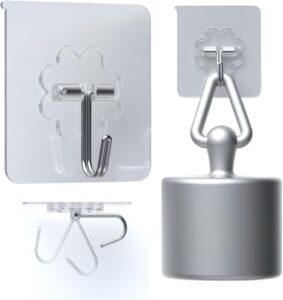
10. Install Hooks for Mugs
Instead of keeping every mug inside a cabinet, use hooks underneath a cabinet or on a suitable wall-mounted rail.
This can free up shelf space while keeping mugs easy to reach. Choose a secure installation method and avoid overcrowding the hooks.
If your kitchen has limited cabinet space, this small change can create surprisingly useful extra storage without requiring additional furniture.
11. Use Tiered Storage Baskets
Tiered baskets make better use of vertical space inside cabinets, on countertops, or in pantry areas.
You can use them for snacks, packets, small containers, kitchen accessories, and cooking ingredients. Stacked storage helps prevent smaller items from getting lost behind larger ones.
For more ideas about choosing and using baskets, take a look at our detailed guide to Best Kitchen Storage Baskets. Storage baskets can be especially useful in small kitchens because they allow similar items to stay together and make crowded cabinets easier to manage.
12. Create a Small Kitchen Command Center
A small section of your kitchen can be dedicated to everyday essentials.
For example, you could keep coffee, tea, sugar, frequently used spices, or cooking accessories together in one organized area.
The goal is to create a convenient zone where commonly used items are easy to access without spreading across the entire kitchen. Keeping similar items together also makes it easier to maintain your kitchen after cooking.
13. Add a Towel Bar Near the Work Area
A towel bar can provide a simple storage solution for kitchen towels and cloths.
Place it somewhere convenient, such as near the sink or food preparation area. Keeping towels in one location helps reduce clutter around the countertop.
A towel bar can also free up drawer space that could be used for other kitchen tools and accessories.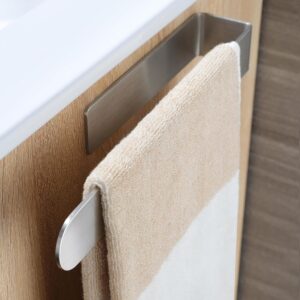
14. Use a Compact Spice Organizer
If you use spices every day, storing them in a small organizer can save both time and space.
Arrange spices alphabetically or according to frequency of use. Label containers when necessary so you can quickly identify what you need.
Instead of keeping every spice on the countertop, keep only your most frequently used options within easy reach and store the rest in a cabinet or drawer.
15. Make Use of a Pegboard Wall
A pegboard can turn an empty wall into flexible kitchen storage.
Depending on the design, you can use it to organize cooking utensils, measuring tools, small pans, kitchen accessories, and cutting boards.
One benefit of pegboards is that hooks and accessories can be rearranged as your storage needs change. This makes them a flexible option for kitchens where storage requirements change over time.
16. Use Decorative Bowls as Functional Storage
Decorative bowls do not have to be purely decorative. A bowl can hold frequently used items such as fresh fruit, onions, garlic, individually packaged snacks, and small kitchen essentials.
Choose containers that fit your available countertop space and keep the arrangement simple.
The idea is to combine functionality with decoration so your storage solutions contribute to the overall appearance of your kitchen instead of making it look cluttered.
17. Organize the Sink Area
The area around the kitchen sink can become cluttered with sponges, brushes, soap, and cleaning products.
A compact sink organizer or sponge holder can keep these items together. Look for designs that allow water to drain properly so sponges and cleaning tools can dry between uses.
Keeping the sink area organized also makes daily cleaning easier and gives your countertop a more polished appearance.
18. Use Cabinet Doors for Extra Storage
The inside of cabinet doors is often unused space. Depending on your cabinet design, you can install suitable organizers for measuring spoons, small spice containers, cleaning supplies, pot lids, and kitchen wraps.
Always check that the added organizer does not prevent the cabinet door from closing properly.
Using cabinet-door storage is particularly useful in small kitchens because it creates an additional storage area without requiring extra floor space.
19. Store Items According to How Often You Use Them
Not everything needs to be equally accessible.
Keep everyday items at eye level or in easy-to-reach drawers. Store seasonal or rarely used equipment in higher cabinets or less accessible areas.
For example, daily-use items can include plates, mugs, utensils, and cooking oils. Weekly-use items might include baking equipment and specialty cookware, while rarely used items could include holiday dishes and seasonal tools.
This simple system can make your kitchen much easier to navigate because the items you need most are always within reach.
20. Use Vertical Dividers for Cutting Boards
Cutting boards, baking sheets, and trays are difficult to organize when stacked horizontally.
A vertical divider can keep them upright and separated. This allows you to pull out one item without disturbing everything else.
Vertical storage is especially helpful in narrow cabinets because it makes better use of the available cabinet height and keeps flat items organized.
21. Declutter Before Adding More Storage
One of the most important small kitchen organization tips is to declutter first.
Before purchasing new organizers, go through your kitchen and remove items you no longer use. Ask yourself whether you have used the item recently, whether you have multiple versions of the same product, and whether the appliance has a regular purpose.
Removing unnecessary items creates storage space without spending money. It also prevents you from filling your kitchen with organizers that you may not actually need.
22. Create Kitchen Zones
Organizing your kitchen according to tasks can make cooking more efficient.
Create separate zones for food preparation, cooking, cleaning, and food storage.
Food Preparation Zone
Keep cutting boards, knives, mixing bowls, and measuring tools nearby.
Cooking Zone
Store pots, pans, cooking utensils, and spices near the stove.
Cleaning Zone
Keep dish soap, sponges, brushes, and towels close to the sink.
Food Storage Zone
Store dry ingredients, containers, and pantry items together.
This approach reduces unnecessary movement while preparing meals and helps every item have a logical place.
23. Use Matching Containers
Matching storage containers can make a small kitchen look cleaner and more organized.
Clear containers are particularly useful because you can see what is inside without opening every container. Consider using containers for rice, pasta, flour, sugar, cereal, beans, and snacks.
Add labels when several ingredients look similar. Keeping ingredients in matching containers can also make crowded shelves easier to organize.
If you want more ideas for organizing pantry and food-storage items, our Best Kitchen Storage Baskets guide can give you additional storage inspiration.
24. Take Advantage of the Space Above Cabinets
If there is unused space between the top of your cabinets and the ceiling, you may be able to use it for items you rarely need.
For example, you could store seasonal serving dishes, decorative kitchen items, extra baskets, or infrequently used cookware.
Avoid storing heavy items where they could fall or become difficult to safely retrieve. Accessibility and safety should always come before maximizing storage.
25. Maintain Your Kitchen Organization
Organizing your kitchen once is not enough. The system needs to be easy to maintain.
Try returning items to their designated location after use, wiping countertops regularly, reviewing pantry items periodically, removing expired food, and decluttering drawers every few months.
If you are considering changing your kitchen layout or adding more drawer storage, our guide on How Many Drawers Should a Kitchen Have? can help you think about drawer requirements based on your available space and cooking habits.
A simple organization system that you can maintain is more useful than a complicated setup that becomes messy again.
Small Kitchen Organization: Quick Checklist
If you want to organize your kitchen without spending a lot of money, start with these simple steps:
- Declutter unused items.
- Clear unnecessary items from countertops.
- Add drawer dividers.
- Use vertical cabinet organizers.
- Install suitable wall shelves.
- Organize spices in one location.
- Use a Lazy Susan for deep cabinets.
- Store pots and pans efficiently.
- Use hooks for mugs and utensils.
- Create separate kitchen zones.
- Label pantry containers.
- Review the organization regularly.
If you are also looking for practical tools that can make everyday cooking easier, check out Best Kitchen Gadgets That Small Family Should Have. Choosing useful, space-conscious kitchen gadgets can help you avoid filling your small kitchen with unnecessary appliances.
How Can I Make a Small Kitchen Look Bigger?
You can make a small kitchen feel more spacious by reducing visual clutter and using storage efficiently.
Keep countertops as clear as possible, use vertical storage, choose organizers that fit your cabinets, and avoid overcrowding open shelves.
Light colors, consistent storage containers, and organized surfaces can also create a cleaner visual appearance. Most importantly, avoid storing more items than your kitchen can comfortably accommodate.
What Should I Store on the Kitchen Counter?
Keep only items that you use frequently on your kitchen counter. Depending on your routine, this might include a coffee maker, toaster, knife block, or a small container for everyday cooking utensils.
Everything else can be stored in cabinets, drawers, or other designated areas when possible.
If you are trying to decide which cooking tools are genuinely worth keeping accessible, our guide to Best Kitchen Gadgets That Small Family Should Have is another useful resource.
How Do I Organize a Small Kitchen Without Remodeling?
You do not need to remodel your kitchen to improve storage.
Start with inexpensive solutions such as drawer dividers, shelf risers, hooks, baskets, cabinet organizers, spice racks, and Lazy Susans.
Decluttering is also one of the most effective ways to create additional usable space. Before purchasing new storage products, make sure you have removed items you no longer need.
Final Thoughts
A small kitchen does not have to feel cramped or disorganized. The key is to make every storage area work efficiently while keeping frequently used items easy to access.
Use vertical space, organize cabinets by category, keep countertops clear, and create dedicated zones for cooking, preparation, storage, and cleaning. Small additions such as drawer dividers, hooks, baskets, rolling carts, and cabinet organizers can make a noticeable difference.
Most importantly, choose organization solutions that match the way you actually use your kitchen. A practical system that is easy to maintain will help your kitchen stay cleaner, more functional, and more enjoyable every day.
At HomeKitchenWorld, we share practical ideas for creating a more organized, comfortable, and functional home—one space at a time.

Hello! I’m trying to explore more and provide my readers with more. Besides being a writer, I’ve also worked as an Editor and Proofreader.