Short answer: No — you should not use mothballs in your kitchen. Mothballs are not a general household pest repellent. They are registered pesticides made to kill clothes moths inside tightly sealed containers, and their labels do not allow them to be scattered in cabinets, left under sinks, placed in a fridge or used anywhere near food. Using them in a kitchen exposes everyone in the home to pesticide vapours in exactly the room where food is stored, prepared and eaten — and it does not even work, because the vapours that kill moths only build up inside a sealed space. This guide explains what mothballs really are, why the kitchen is one of the worst places for them, what to do if you have already put them there, and the safer methods that actually solve a pantry moth problem.
The confusion is understandable. Mothballs are cheap, sold in ordinary shops and have been used in homes for generations, so they feel like a harmless staple rather than a pesticide — and older advice treated them as an all-purpose way to keep insects out of cupboards. Current official guidance says the opposite, and it is not ambiguous: mothballs belong in one place only, sealed up with stored clothing.
What Mothballs Actually Are
Mothballs — sold as balls, flakes, crystals, cakes and bars — are solid pesticides. In the United States they contain a very high concentration of one of two active ingredients:
- Naphthalene, a chemical made from coal tar or crude oil, with the strong, tar-like smell most people associate with mothballs.
- Paradichlorobenzene (also written as 1,4-dichlorobenzene or PDB), a chlorinated chemical also used in some deodoriser blocks.
How mothballs work
A mothball does not work by smell alone. It slowly turns directly from a solid into a gas — a process called sublimation — and that gas is toxic. Inside a sealed container, the vapour is trapped, builds up to a high concentration, and kills clothes moths and their eggs and larvae feeding on stored fabrics. That mechanism explains both halves of the safety rule: the product only works in an airtight space, and the vapour it depends on is a poison you do not want drifting around a living space. The National Pesticide Information Center (NPIC) is blunt about the intended use: mothballs are meant to be used in closed, airtight containers, and they should not be used around food or food preparation areas.
Why Mothballs Don’t Belong in a Kitchen
They are not approved anywhere near food
A kitchen concentrates everything the label warns against: open food, food packaging that vapours can settle on, preparation surfaces, utensils, and people — including children — spending time in the room every day. Mothballs placed in a pantry, cupboard, fridge or under a sink put pesticide vapour in direct contact with that environment for weeks, because a mothball keeps giving off gas the whole time it is slowly shrinking away. There is no placement inside a kitchen that fixes this. A bowl in the corner, a few balls at the back of a cupboard and a packet near the fridge are all the same basic problem.
In open air they do not even work
The one thing kitchen use is supposed to achieve — keeping insects away — is the thing mothballs are worst at outside a sealed container. In an open room the vapour disperses long before it reaches the concentration that affects insects, so scattered mothballs deliver the exposure without the pest control. They are also not wildlife or rodent repellents, and they are not labelled for cockroaches, ants, mice, snakes or any other kitchen pest. A product being sold for one insect, in one sealed setting, is not evidence it does anything to a different pest in an open room.
They create a risk for children and pets
Mothballs are small, round and pale — easy for a crawling child to pick up and mouth, and easy for a dog or cat to treat as something to play with or eat. A kitchen puts them at exactly the height and in exactly the places where that happens: low cupboards, floor corners, under the sink. Labels carry a “keep out of reach of children” warning for this reason, and NPIC notes that small children and pets are at risk of eating mothballs precisely because they can look like candy or a treat.
The Label Is the Law: What Mothballs Are Actually Approved For
Mothballs sold in the US are registered with the Environmental Protection Agency (EPA), and registration comes with a label that is not a suggestion. Under the federal pesticide law (FIFRA), it is a violation of federal law to use a registered pesticide in a manner inconsistent with its labelling — and EPA-registered mothball labels are specific. A typical label, such as the one for Enoz Para Moth Balls, states that the product kills clothes moths and carpet beetles and their eggs and larvae in clean, airtight containers, such as chests, trunks, garment bags and storage closets, warns not to use containers that allow vapours to escape into occupied rooms, and instructs users to keep the product out of reach of children and pets and not to place it in areas accessible to them.
Read against that label, the approved use looks like this:
- Stored clothing or fabrics, cleaned before they are put away.
- Inside a container that seals tightly enough that no smell escapes — if you can smell it in the room, the container is not airtight.
- The amount stated on the label for the size of the container, kept in the sealed space for the time the label specifies.
- Clothes aired and washed after storage before they are worn, especially before they are used for babies.
Everything else — the kitchen, the pantry, the garden, the attic floor, the space under a porch — is off-label use. States can and do issue their own warnings and guidance on top of the federal label, and poison centres and health departments repeat the same message: if a use is not on the label, do not do it.
The Health Risks of Mothball Exposure
Breathing the vapours
People exposed to naphthalene vapours have developed headaches, nausea, dizziness and vomiting, and the gases from both active ingredients can irritate the eyes, nose, throat and lungs. These effects are most likely where mothballs are used in the open or in large amounts, because the vapour spreads through the room instead of staying in a container. Naphthalene is also classified by the EPA as a possible human carcinogen based on animal studies. Either way, it is not a vapour to add deliberately to the air of a room where your family eats.
Children, babies and people with G6PD deficiency
The most serious documented harm from naphthalene is hemolytic anemia, in which red blood cells break apart and can no longer carry oxygen properly. It can follow breathing in enough vapour or eating a mothball, and small children are the group most often affected: children who have eaten naphthalene mothballs have developed diarrhea, fever, abdominal pain and painful urination with discoloured urine, alongside the anemia. Babies are vulnerable in a quieter way too — anemia has been reported in infants dressed in clothing or wrapped in blankets that were stored with mothballs and not washed and aired afterwards. People with an inherited enzyme deficiency (G6PD deficiency) are at much greater risk of anemia from naphthalene than everyone else, and families may not know a child has it until an exposure happens.
Pets
Dogs that have eaten naphthalene mothballs may show lethargy, vomiting, diarrhea, loss of appetite and tremors, and paradichlorobenzene has its own toxic effects on the liver and nervous system in animals. A pet does not need to eat a whole box: loose mothballs in living spaces are an avoidable poisoning risk in a way that a sealed storage container in a wardrobe is not.
If someone swallows a mothball
Do not wait for symptoms. In the US, call Poison Control on 1-800-222-1222 straight away for a person, and call your veterinarian or an animal poison service immediately for a pet. If you can, have the mothball packaging to hand so you can say which active ingredient it contains — naphthalene and paradichlorobenzene are treated differently, and the clinicians will ask.
Already Put Mothballs in Your Kitchen? What to Do Now
If this article is describing your cupboard, the fix is straightforward and does not need any special equipment:
- Remove them. Pick up every mothball with gloves rather than bare hands, including any that have rolled under appliances or into corners, and put them straight into a sealed bag or container so the vapour stops spreading while you decide on disposal.
- Ventilate. Open windows and, if you have one, run the extractor fan. Fresh air is what clears the vapour; the smell fading is a sign the concentration is dropping.
- Clean the surfaces. Empty the cupboard or shelf where they sat and wash it with hot, soapy water, then dry it. Throw out any open, unpackaged food that sat in direct contact with or right beside the mothballs — sealed, undamaged packaging that was elsewhere in the kitchen does not need to be discarded on mothball grounds.
- Wash what can be washed. Tea towels, cloths and any fabric that shared the space should be laundered before it goes back near food.
- Dispose of them as household hazardous waste. Mothballs are pesticide waste. Do not flush them, pour them down a drain, or scatter them outside, and do not burn them. The EPA’s label disposal language directs unused pesticide waste to your state pesticide or environmental agency or local household hazardous waste programme for guidance — most communities run collection events or a permanent drop-off, so check your local programme and take the sealed bag there.
How to get rid of the mothball smell
The smell outlasts the mothballs because the vapour soaks into fabrics, wood and other porous materials. Airing is the main tool: leave cupboard doors open, ventilate the room daily, and air or wash fabrics rather than sealing them away with the smell still in them. Washable items can be laundered — a vinegar rinse is a common household approach for stored clothing — and a bowl of baking soda or activated charcoal left in the closed cupboard can help absorb what lingers. Expect patience: a heavy, long-standing smell can take repeated airing and washing over days or weeks to clear.
What to Do About Pantry Moths Instead
The moths people usually find in a kitchen are not clothes moths at all. They are pantry pests — most often the Indian meal moth — whose larvae feed on flour, grains, cereals, nuts, dried fruit, spices and pet food, and which usually arrive inside an infested package from the shop. Mothballs were never the answer to them, and university extension services are consistent that insecticides are not recommended for pantry pests. Sanitation and storage are. The method that works is unglamorous and effective:
Find and remove the source
Check every dry-goods package, including the ones at the back and the pet food. Look for webbing, tiny larvae, cocoons in package folds and shelf corners, and damaged kernels. Anything infested goes into a sealed bag and straight into an outside bin — keeping it in the kitchen bin just spreads the problem. For suspect-but-unopened items, freezing at 0°F for around four days kills the pest at every life stage.
Clean the empty pantry properly
Take everything out, vacuum shelves, seams and corners with a crevice tool — eggs and larvae hide in cracks — then wash shelves with hot, soapy water and let them dry fully. Empty the vacuum outside or dispose of its bag or contents in a sealed bag so you are not storing what you just removed.
Store food so moths cannot get in or spread
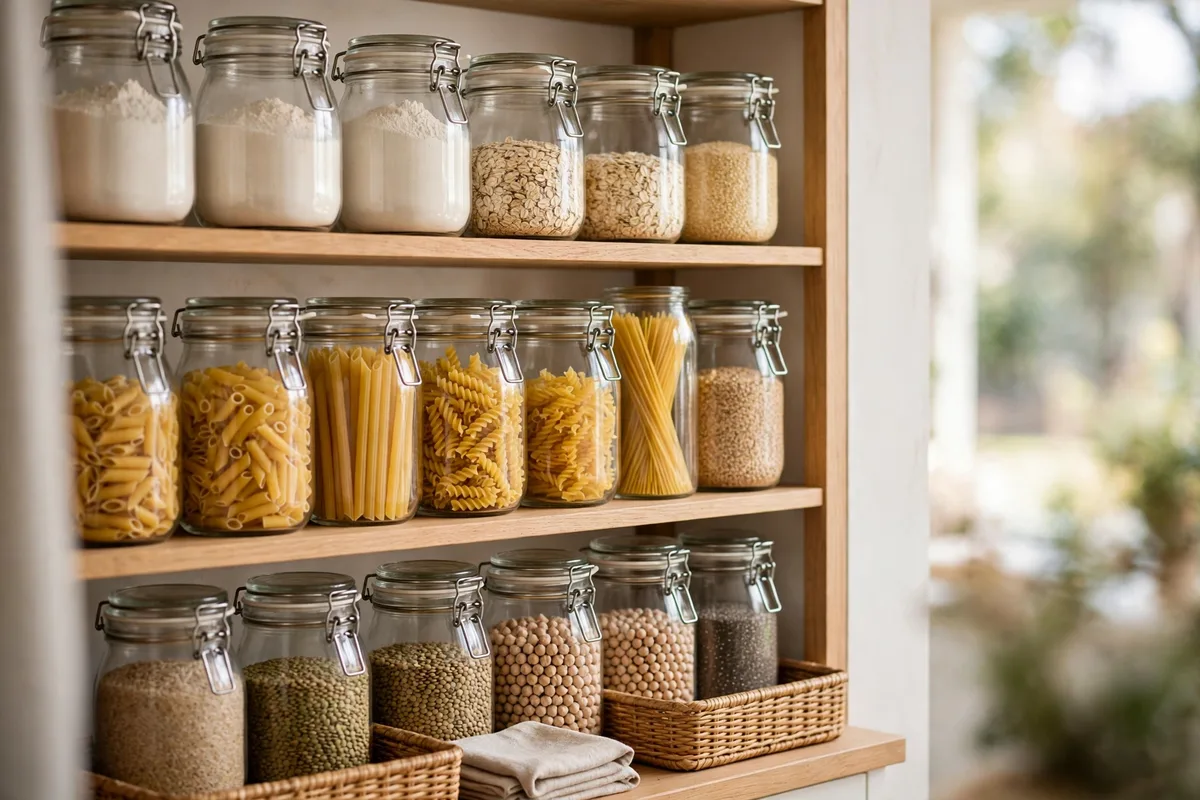
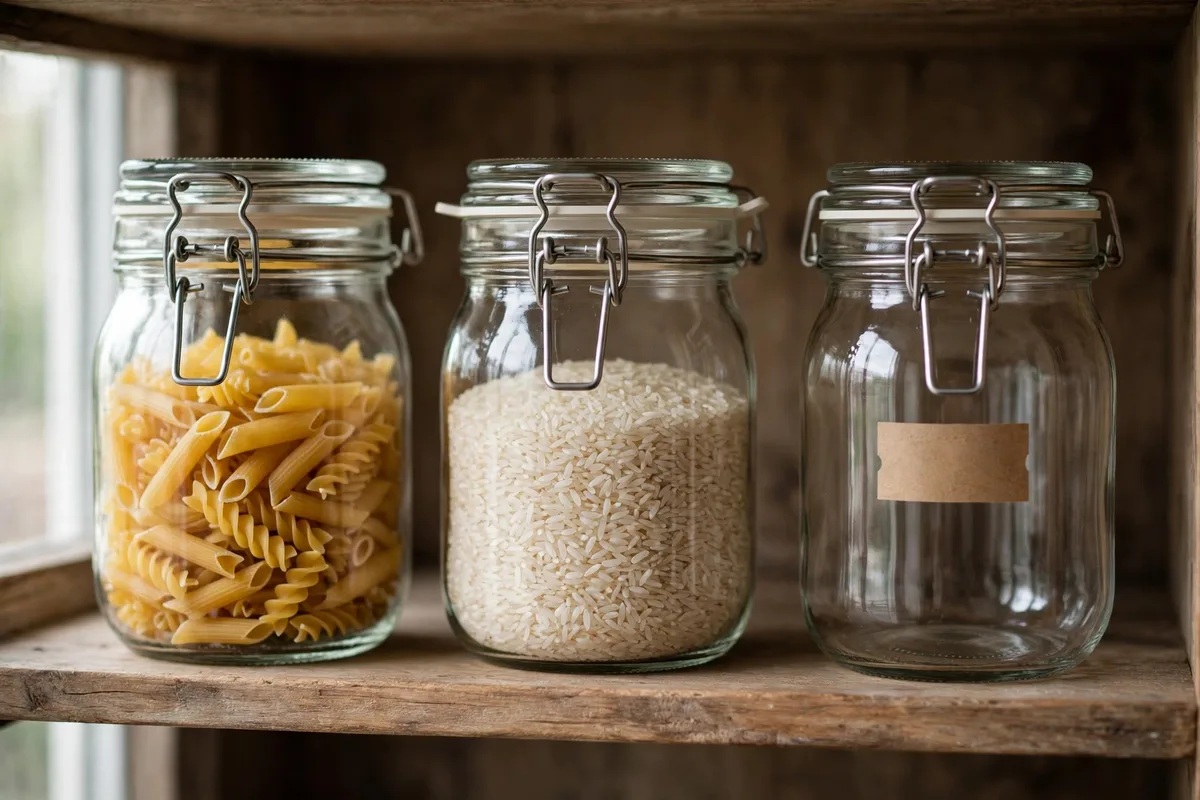
Decant dry goods into rigid, airtight containers of glass, thick plastic or metal with tight-fitting lids; larvae can chew through paper, thin plastic and foil. Buy grain products in quantities you will use within a couple of months, rotate stock first-in, first-out, and keep food storage to a few defined areas so a problem stays small and findable. Good pantry organisation is a large part of prevention — our guide to how to organize a small kitchen covers the storage habits that make this easier to keep up.
Monitor with traps — and understand their limits
Pheromone traps for pantry moths catch adult males and are useful for one job: telling you whether moths are still present after your clean-out, and roughly where. They do not clear an infestation on their own, because the larvae in the food are the problem. Use a trap as a monitor for a few weeks after cleaning; if it keeps catching moths, there is a package you missed.
Safer Ways to Protect Stored Clothes
For the job mothballs are actually sold for — protecting stored clothes from clothes moths — most households can get the protection without the pesticide:
- Clean before storage. Clothes moth larvae feed on wool and other natural fibres, and they are drawn to body oils, sweat and food traces. Wash or dry-clean garments before they are stored; clean clothes in a sealed container are rarely attacked.
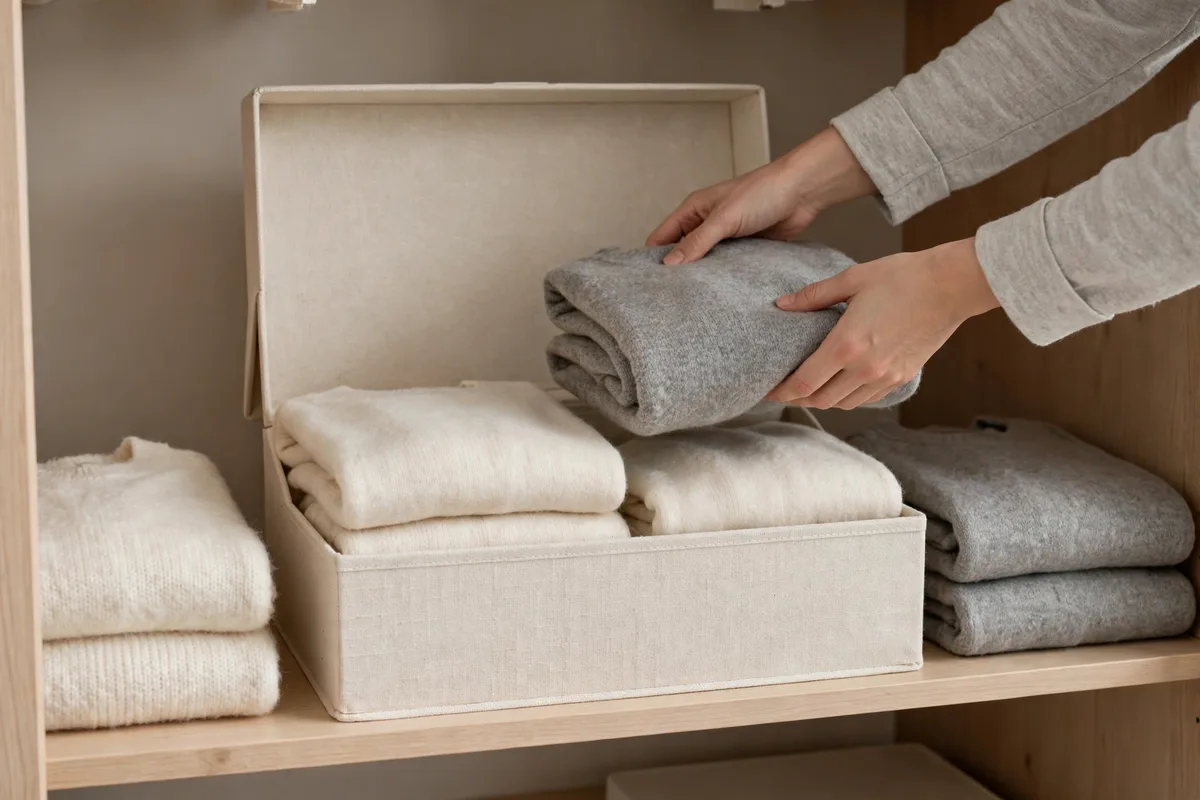
- Seal them away. Airtight bins, boxes and garment bags physically exclude moths. Exclusion does the work that people hope a repellent smell will do.
- Use cold where practical. Freezing suitable items at 0°F for several days kills eggs and larvae, which is why it is a standard museum and extension recommendation for infested textiles.
- Cedar and lavender — with honest limits. Cedar blocks and lavender sachets may help deter adult moths from settling in a clean, sealed space, and they smell pleasant rather than chemical. They do not kill larvae already present, cedar loses strength as its oils fade, and neither replaces cleaning and sealing. Treat them as a minor extra on top of the steps above, never as the method itself.
- Check stored clothes periodically. A quick inspection each season finds a problem while it is still one garment, not a wardrobe.
Frequently Asked Questions
Can I put mothballs in my pantry to keep moths away from food?
No. Pantry moths are a different pest from clothes moths, mothballs are not labelled for use around food, and NPIC states they should not be used around food or food preparation areas. The effective response is to find and discard infested packages, vacuum and wash the pantry, and store dry goods in rigid airtight containers.
Is it illegal to use mothballs in the kitchen?
Using any EPA-registered pesticide in a way that contradicts its label is a violation of federal law, and mothball labels restrict use to killing clothes moths and carpet beetles in clean, airtight containers such as chests, trunks and garment bags. Kitchen cupboards, fridges, open rooms, gardens and under-sink spaces are not on that label, so using mothballs in them is off-label use.
Do mothballs keep mice, cockroaches or other pests away?
There is no good evidence that they do, and they are not registered or labelled for those pests. NPIC states plainly that mothballs are not wildlife repellents. In open air the vapour disperses too fast to reach pest-affecting concentrations anyway — you get the exposure without the effect.
Is the smell of mothballs harmful?
The smell is the pesticide vapour itself, so smelling mothballs strongly means you are breathing the active ingredient. Exposure to naphthalene vapours has caused headaches, nausea, dizziness and vomiting, and heavier exposure can damage red blood cells. A persistent mothball smell in a living space is a sign the product is being used in the open, which is exactly the use to stop.
What happens if a child or pet eats a mothball?
Treat it as poisoning, not a wait-and-see situation. Children who eat naphthalene mothballs can develop hemolytic anemia along with fever, abdominal pain and diarrhea, and dogs may vomit, become lethargic and develop tremors. Call Poison Control on 1-800-222-1222 immediately for a child, or your veterinarian or an animal poison service for a pet, and tell them which active ingredient the product contains if you know it.
How long does mothball smell last after you remove them?
It depends on how long they were there and what absorbed the vapour. Fabrics, wood and upholstery hold the smell after the mothballs are gone, so expect repeated airing and washing over days to weeks rather than an instant fix. Airing stored clothes outdoors and laundering them is the standard first step.
Are cedar balls a safe alternative to mothballs?
Cedar is far less hazardous than a registered pesticide, and cedar blocks can help deter adult clothes moths in a clean, sealed storage space. But cedar does not kill larvae, and it weakens as it ages. The reliable protection for stored clothes is cleaning garments before storage and sealing them in airtight containers — cedar is an optional extra, not a substitute.
How should I dispose of mothballs I no longer want?
As household hazardous waste. Keep them in a sealed container, do not flush them or put them down a drain, and take them to your local household hazardous waste collection or follow your state pesticide agency’s guidance, which is what EPA-registered labels direct you to do.
Final Thoughts
The honest answer to “can you use mothballs in the kitchen” is that the question rests on a misunderstanding of what mothballs are. They are not a kitchen product, a food protector or a general pest repellent; they are a sealed-container clothes-moth pesticide whose label is also its legal instruction. In a kitchen they add pesticide vapour to the room where your food lives, put a poison within reach of the children and pets most at risk from it, and fail at the job they were brought in to do. The problems people actually bring mothballs into kitchens for — pantry moths, insects in cupboards, peace of mind about stored food — are solved better and more permanently by finding the source, cleaning properly and sealing food in real airtight containers. That is more work than dropping a few balls in a cupboard, and unlike the mothballs, it works.

Hello! I’m trying to explore more and provide my readers with more. Besides being a writer, I’ve also worked as an Editor and Proofreader.